Doubled Chromosomes Make Stem-Cell Heart Cells Contract Harder
Japanese researchers fused stem cells to double their chromosomes, and the heart cells grown from them looked and behaved more like mature ones.
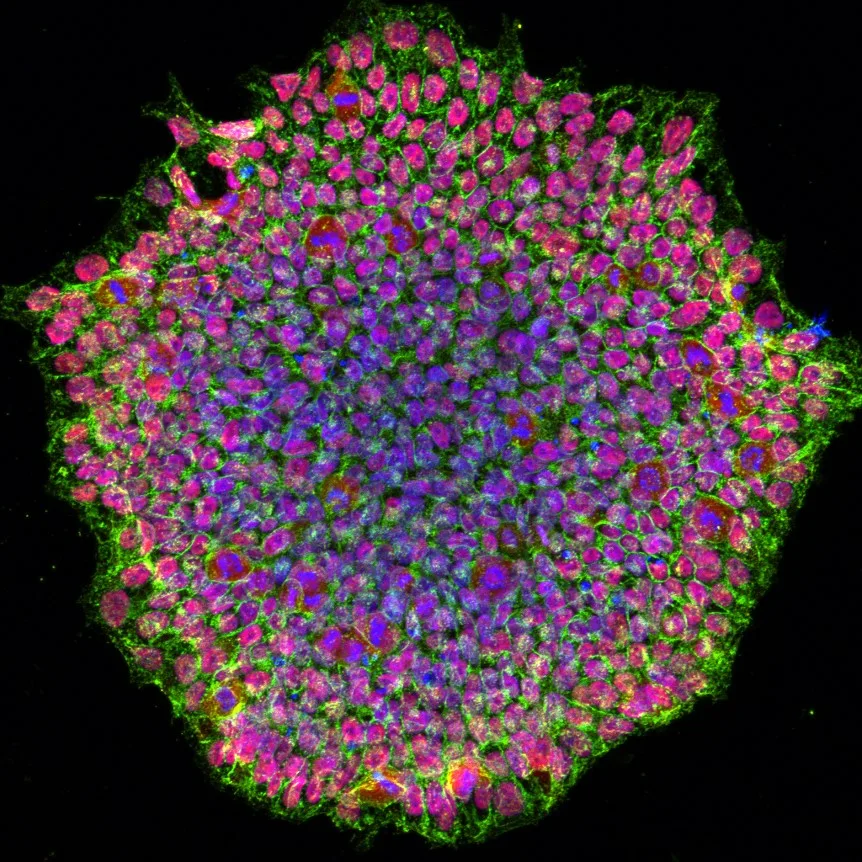
Researchers at a Japanese institute's Regenerative Medicine Project have produced heart muscle cells from stem cells that contract more strongly and quickly, by doubling the cells' chromosomes before they develop into heart cells.
The work was published online in Communications Biology on Aug. 17, 2026. It comes from the institute's Regenerative Medicine Project, led by Yuichiro Miyaoka, with Ittetsu Nakajima, then a graduate student at Institute of Science Tokyo, and Mitsuyoshi Shimane of Nanion Technologies Japan.
An immaturity problem
Heart cells made from human induced pluripotent stem (iPS) cells have stayed immature, resembling an embryonic or fetal state, which has been an obstacle to clinical and medical uses. Most body cells are diploid, with 46 chromosomes. Heart and liver cells double their chromosome sets as they mature, and about 80% of adult cardiomyocytes carry four copies of each of the 23 chromosomes.
Normal iPS cells are diploid, and the cardiomyocytes grown from them mostly stay diploid. Methods available until now could not directly double the chromosomes of cardiomyocytes made from them. The team instead doubled the iPS cells first. They fused diploid iPS cells with Sendai virus particles, which are known to promote cell fusion, and then differentiated the resulting cells into cardiomyocytes.
The tetraploid iPS cells were slightly larger than ordinary ones, kept their four chromosome sets and stayed pluripotent.
Results in the dish
The heart cells from tetraploid stem cells were larger, as cells are when they mature in the body. RNA sequencing showed much lower expression of cell-cycle genes than in diploid-derived cells. In the body, cardiomyocytes divide actively in the diploid fetal stage and stop once they become tetraploid, so the profile resembled that of mature cells.
Mitochondria, which supply the energy contraction needs, increased in both number and function. Electrical impedance measurements showed that the cells contracted more strongly and faster than their diploid counterparts.
The team expects the technology to help with transplantation therapy for heart failure, safety and efficacy testing of drug candidates, and disease models. It may also suit other cell types that double their chromosomes as they mature, such as liver cells, skeletal muscle cells, megakaryocytes and osteoclasts.
Source: Communications Biology