Engagement Rings Are Worn More and Insured Less, Study Finds
A 2026 survey by jewelry insurer Jewelers Mutual finds that most wearers keep engagement rings on while cooking, sleeping and hiking, but only 49% of respondents decide to insure the ring when it is bought.
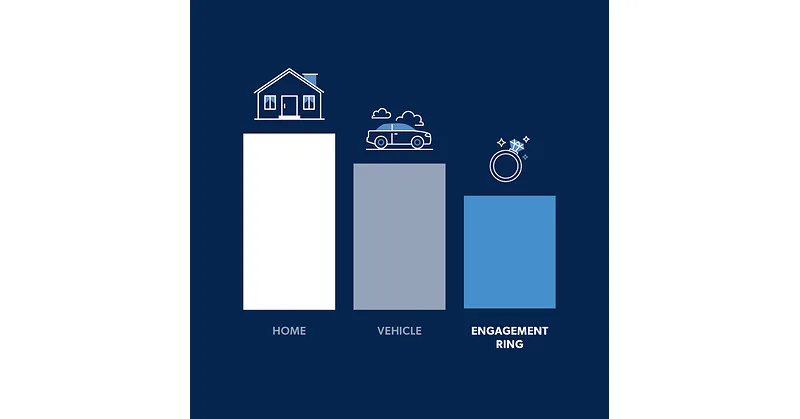
Jewelers Mutual Group, a jewelry insurer based in Neenah, Wisconsin, has published findings from its 2026 Engagement Ring Study. The survey looks at how couples choose, wear and protect their rings, and concludes that habits of protection lag behind habits of wearing. It also finds that both partners wearing a ring is now the norm overall, though with a wide gap between generations: over 80% of couples aged 55 to 64 both wear one, against 43% of couples aged 18 to 24.
Risk before and after the proposal
According to the study, 41% of proposers keep the ring for more than a month before they propose. Only 49% of respondents decide on insurance at the time of purchase, and 45% store the ring somewhere unsecured, such as a drawer or closet, while they wait. After the proposal the ring rarely comes off. Nine in ten wearers travel with it, 60% cook in it, 60% sleep in it and 65% keep it on while hiking. For 62% of respondents the ring is one of the three most expensive things they own, yet 55% of uninsured wearers whose ring was damaged never had it repaired.
Mike Alexander, president at Jewelers Mutual, advises couples to:
- buy insurance before or at the proposal rather than afterwards;
- photograph the ring and have it professionally appraised;
- keep it in a safe or a safety deposit box until the proposal;
- look at specialized jewelry insurance, since standard homeowners or renters policies often cap jewelry at less than a ring is worth.
How rings are chosen
Design or uniqueness is the leading factor in choosing a ring, named by 52% of respondents and well ahead of price, stone size and brand. Solitaire settings now account for 37% of rings, up from 22% two years ago, and white gold is still the most common metal, although interest in platinum has grown. Respondents who set a budget by what felt comfortable to them, not by an outside benchmark, reported the most confidence and the least financial stress. Among wearers who do not yet have their final ring, 84% are still researching options. Jewelers rank second, after family, as a trusted source of advice on jewelry care. The survey was conducted online in May 2026 among 2,000 U.S. adults who bought or received an engagement ring in the last five years.
Source: Jewelers Mutual