Oxford Street Goes Vehicle-Free Along Half Its Length
From 7am on Monday, buses, taxis and bikes are barred from about half of London's Oxford Street under a £150m scheme.
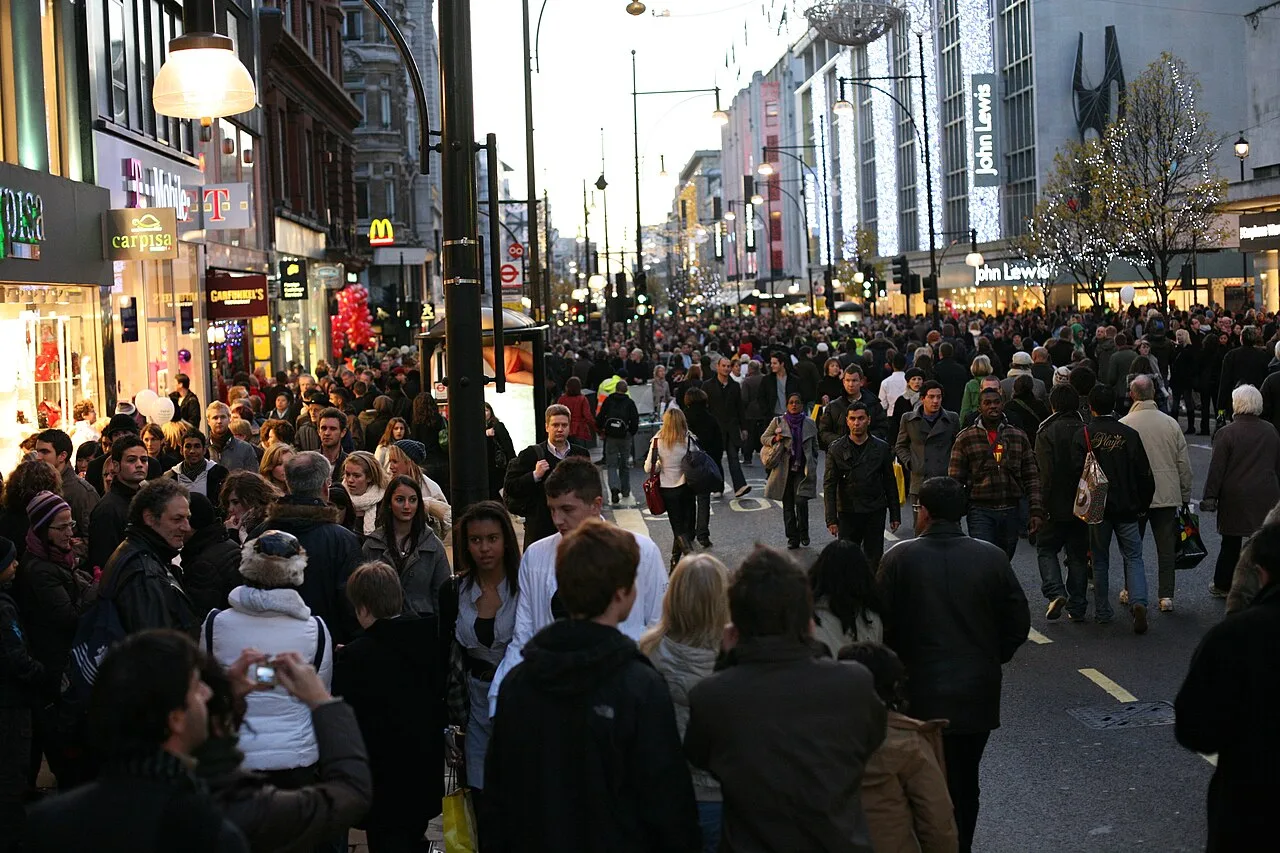
London's Oxford Street began its long-awaited pedestrianisation on Monday. From 7am on 26 October, nearly 0.6 miles (almost 1km) of the 1.2-mile street, about half of it, is closed to all vehicles. The stretch includes department stores such as John Lewis and Selfridges.
The closure runs from the junction with Orchard Street, near Marble Arch, to Great Portland Street, east of Oxford Circus, between 7am and midnight every day. Private cars were already banned between 7am and 7pm. That ban now applies around the clock and extends to buses, black cabs and bicycles. Businesses can still take deliveries outside those hours by certain access routes.
What changes for travellers
Vehicles can still cross the pedestrianised stretch at several points, including the Regent Street junction at Oxford Circus and New Bond Street. Bus routes 7, 98 and 390 now run along Wigmore Street, parallel to Oxford Street. Taxi ranks will sit within 100m of the traffic-free area.
Unlike some other car-free parts of London, cycles, e-bikes and e-scooters are not allowed on the strip at any time. Mobility scooters are. Bond Street and Tottenham Court Road stations, on the Underground and Elizabeth line, are both step-free, and emergency services can reach the whole area through the cross streets. Cargo e-bikes will collect litter and clean the street during pedestrian hours.
A £150m scheme with more to come
The scheme costs £150m and has government backing, which helped it override objections from the local council. It is a political win for the London mayor, Sadiq Khan, who has made the change part of his clean air plans. London has studied the pedestrianisation of central Sydney and discussed the scheme with Barcelona, whose La Rambla is seen as shabbier than its reputation deserves.
Khan has spoken of turning Oxford Street into a public plaza with outdoor dining, and better street furniture and lighting are coming. Early next year more trees and seating are due to be installed, and the road surface will be raised level with the pavements in places to create public squares and event spaces. Plans for the rest of the street are expected to depend on how this first phase goes.
Source: The Guardian