Google's Orbiting TPU Satellite Sends Back Its First AI Reply
Google's Project Suncatcher prototype ran its Gemma 4 model on an onboard TPU and downlinked a haiku about space.
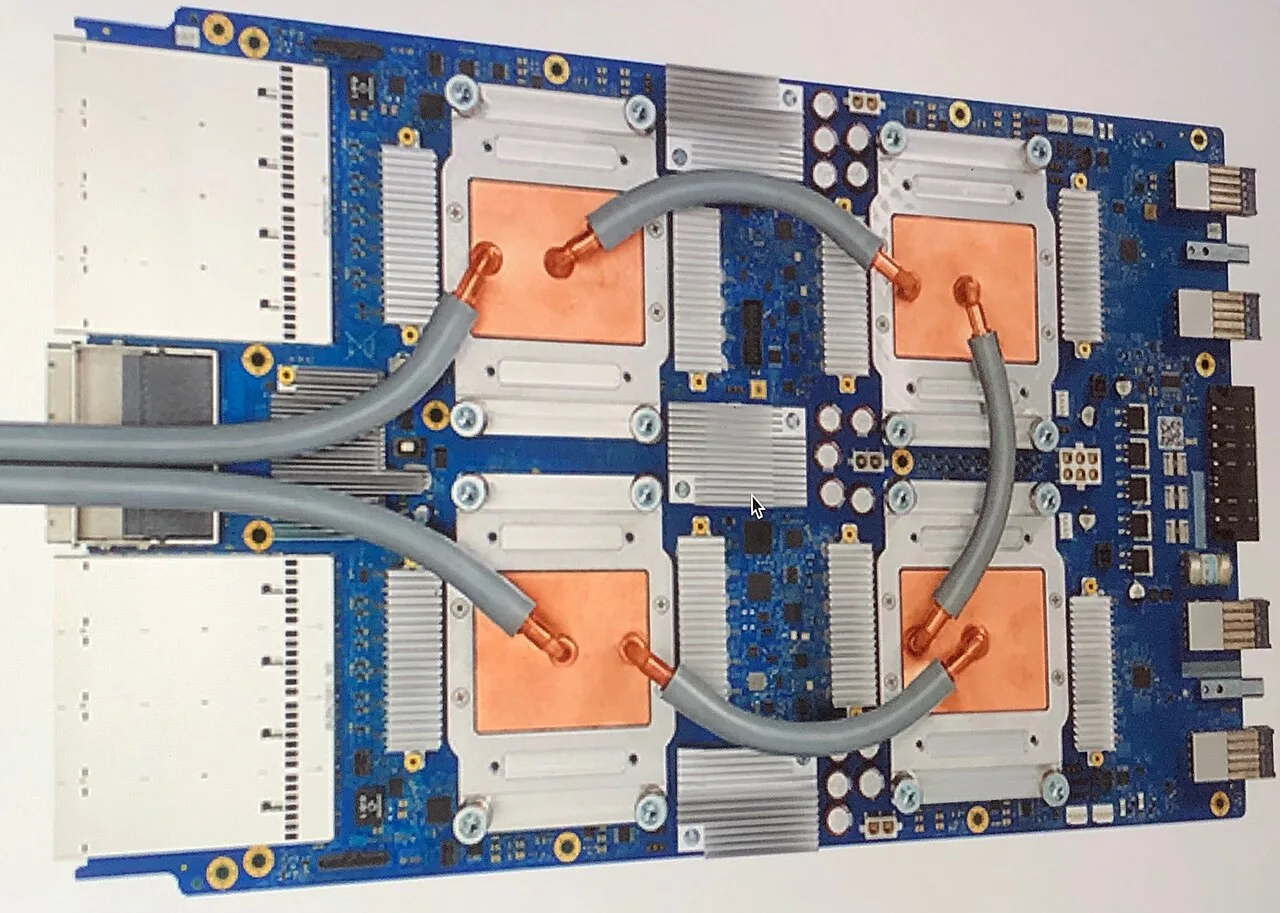
Google's prototype satellite for Project Suncatcher has produced its first response from space. The onboard Gemma 4 model was asked to write a haiku about being in space, and the poem came back to Earth during a pass over Svalbard, Norway.
Blue marble below / Data streams in silent grace / Starlight feeds my core.
Google calls the result its "Hello World" milestone: the first AI response from a data-center-class TPU in orbit. The company also tried space-themed limericks and telemetry prompts that asked the payload to report its technical status. A spokesperson said the satellite is operating nominally.
Weeks of commissioning
The satellite was launched on October 1, alongside more than 100 other spacecraft on a SpaceX Falcon 9. Engineers then spent about three weeks on a commissioning checklist, powering up the host and the TPU trays and running early machine-learning tests.
The craft carries four Tensor Processing Units and generates up to 1 kW of electricity. That power budget means only one chip can run at a time, for about 20 minutes. It complicates communication between space and the ground.
What comes next
Tests will now look at how the TPUs cope with thermal stress and radiation in orbit. Radiation can cause bit flips, which corrupt stored values without setting off standard monitoring tools. Google has tested its TPUs in particle accelerators on Earth. Ground testing suggested the effect would be minor for inference and a bigger problem for training a model.
"Verifying our TPUs can reliably execute workloads in space paves the way for our next milestone of twin interconnected satellites in 2027," Google said. Those two spacecraft are to generate more power and demonstrate optical links between satellites.
Source: Google