US, Russia and China Race to Put Nuclear Reactors on the Moon
NASA aims for a lunar reactor by 2030 and Russia, working with China, by 2036. The reactors would power mining of ice near the moon's south pole.
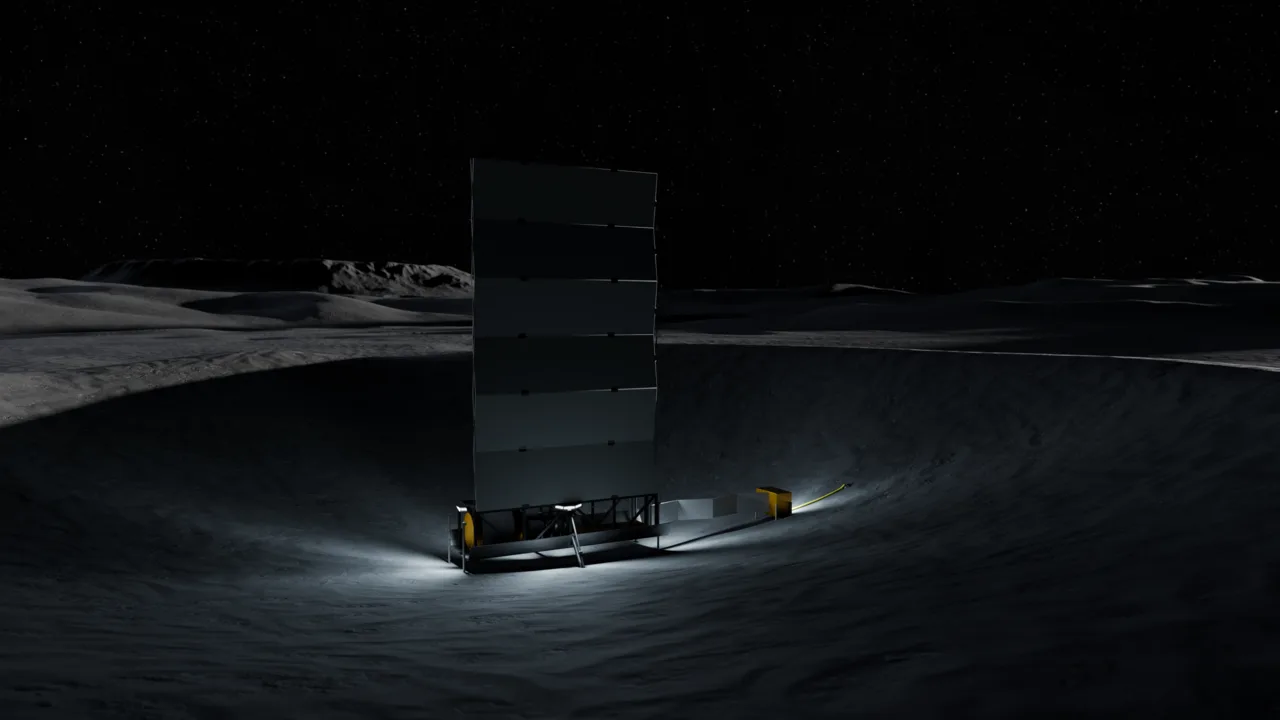
The United States, Russia and China are racing to build nuclear reactors on the moon. Scientists are warning about the risk of a radioactive mishap.
NASA announced plans in January to develop a lunar reactor by the end of 2030. Russia, working with China, aims to do the same by 2036. A December 2025 executive order from President Donald Trump told NASA to have a reactor ready to launch by 2030.
Two designs
NASA's Lunar Reactor 1 would produce 20 kilowatts of electricity and run on its own for five years without maintenance. It weighs under 6,000kg and is designed to fit a rocket compartment 3.7 metres long and 5.5 metres wide.
Russia's reactor, called Selena, would produce 10 kilowatts and run for a decade without maintenance. It is expected to weigh about 1,100 to 1,300kg, which would allow an easier and softer landing. It is meant to power a Chinese-led moon base by about 2036.
The reactor would be built on Earth first. A robotic spacecraft would then carry it to the moon, firing rocket engines to slow the descent into a gentle touchdown. The US and Russia both say they would not power up their reactors until they reach the moon, so radiation danger stays at a minimum until the last step.
Why a reactor
The three countries want bases near the moon's south pole, close to frozen water in permanently shadowed craters. Scientists believe the ice could supply drinking water, air and rocket fuel. Elon Musk has said he wants to extract minerals such as aluminium, titanium and silicon.
Solar power is limited because the sun shines on any one spot only half the time, leaving panels dark for about two weeks each month. Simon Middleburgh, director of Bangor University's Nuclear Futures Institute, called nuclear energy the "obvious choice". He said it should be used "responsibly". Three or four reactors working together would probably be needed, he added.
The Soviet Union launched more than 30 fission reactors into Earth orbit between the late 1960s and the 1980s to power spy satellites. The US has spent $20bn on advanced space nuclear programmes over 70 years. It has not successfully launched a reactor since a 1965 experiment that shut down after 43 days.
Geopolitics is part of the push. Sean Duffy, the US transportation secretary, said in August that the US is racing China to the moon. China's Xi Jinping and Russia's Vladimir Putin have each unveiled lunar reactor plans too.
Risks and rules
Middleburgh said the 2030 deadline is likely for building the reactor itself. The harder part is the landing and set-up. "The biggest challenge isn't really the nuclear technology at all," he said, pointing to launch regulation, launch platforms and safe set-up on the surface.
Uranium before use is not very radioactive, so a launch accident would be less frightening than it sounds, Middleburgh said. The risk is larger if a running reactor falls back to Earth. In 1978 the Soviet satellite Kosmos 954 scattered radioactive material across nearly 124,300 square km of northern Canada. On the moon, contamination would be "extremely localised", he said.
The 1967 Outer Space Treaty bans claims to the moon but does not ban nuclear power in space. A Lunar Policy Platform report released last month says existing liability rules were not designed for long-term hazardous equipment on another celestial body.
Source: Al Jazeera