Researchers List 27 Giant Exoplanets for Lazuli Space Telescope
A new paper picks 27 gas giants with well-known orbits as first targets for the coronagraph on Lazuli, the first privately owned space telescope, due by 2029.
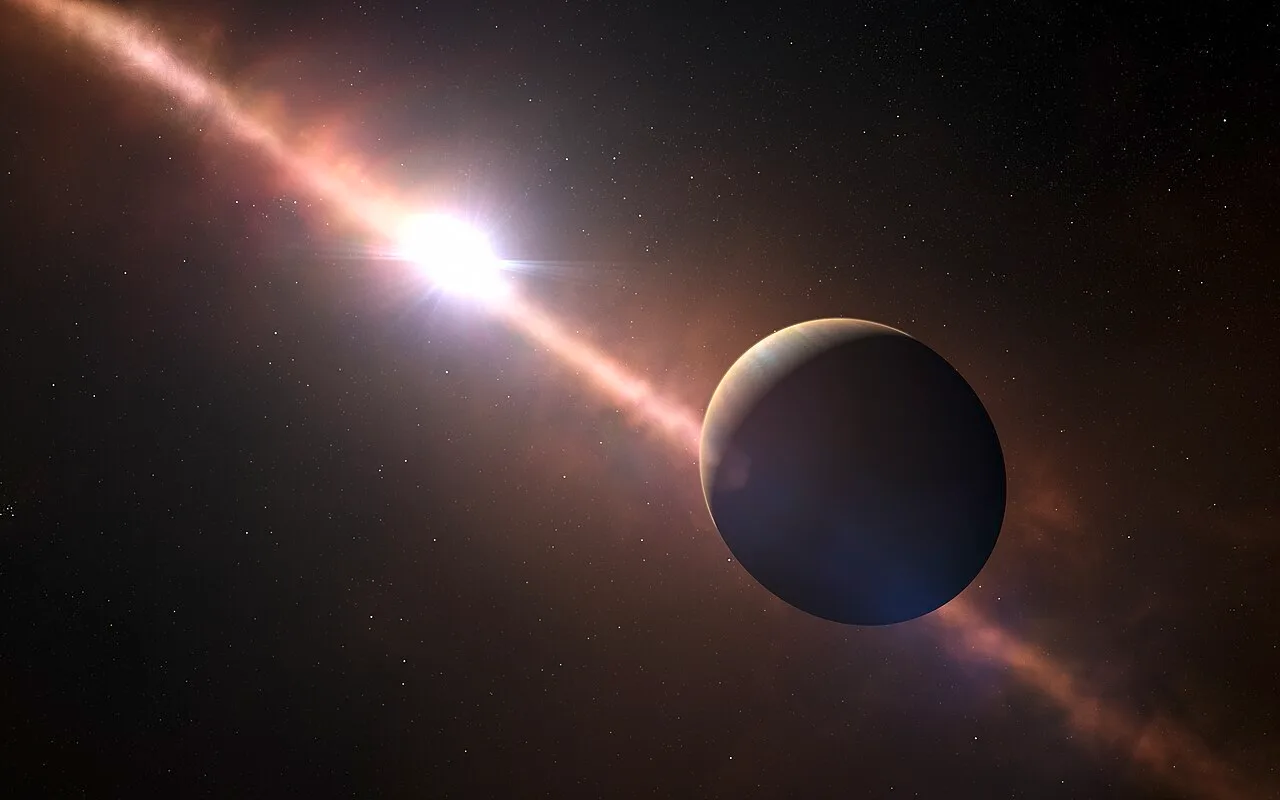
Two astronomers have proposed a first list of targets for the planet-imaging instrument on the Lazuli Space Telescope. It holds 27 giant exoplanets, chosen because their orbits are already well known.
Lazuli is billed as the first private space telescope. It comes from Eric Schmidt, the former Google CEO, and is due to launch by 2029. Its 3-metre mirror is larger than the 2.4-metre mirror on Hubble. The telescope will carry three instruments: a wide-field optical imager, an integral field spectrograph and the ExtraSolar Coronagraph.
Why reflected light
The target list is described in a paper on arXiv by Logan Pearce of the University of Michigan and Ewan Douglas of the Steward Observatory at the University of Arizona. So far, every exoplanet imaged directly has been seen through its own thermal glow. The coronagraph is meant to look at starlight reflected from planets instead.
That matters because planets lose heat as they age and grow dimmer, while reflected starlight does not fade with age. Visible-light imaging also reaches planets closer to their stars than infrared does. The authors write that this opens up mature planetary systems and even the search for biosignatures.
The catch
The contrast involved is extreme, on the order of 10^-7 to 10^-9, and exposures could run from tens to hundreds of hours. For a 3-metre-class observatory, the authors say, searching blindly is hard. Aiming at planets with known orbits lets observers time their runs for the best chance of detection.
All 27 planets on the list are giants. The authors say they span ages and temperatures not probed before by direct imaging, and that some will also be reachable by the METIS thermal imager on the Extremely Large Telescope and by the Nancy Grace Roman Space Telescope's coronagraph. Combining those observations would give a fuller picture of their atmospheres.
Some names on the list may be familiar to exoplanet watchers. 55 Cancri d is a Jupiter analog. HD 181433 d follows a highly eccentric orbit and belongs to a system that also has an ultrashort-period super-Earth. Beta Pictoris b was among the first exoplanets to be imaged directly and interacts with a well-known debris disk.
A private space telescope is something not seen before. It remains to be seen how effective a privately owned telescope will prove, and what private ownership will mean for how it is run.
Source: arXiv