Earth May Have Made Much of Its Own Water as It Grew
Lab experiments suggest rocky pebbles falling through a hot hydrogen atmosphere could have produced water on the young planet.
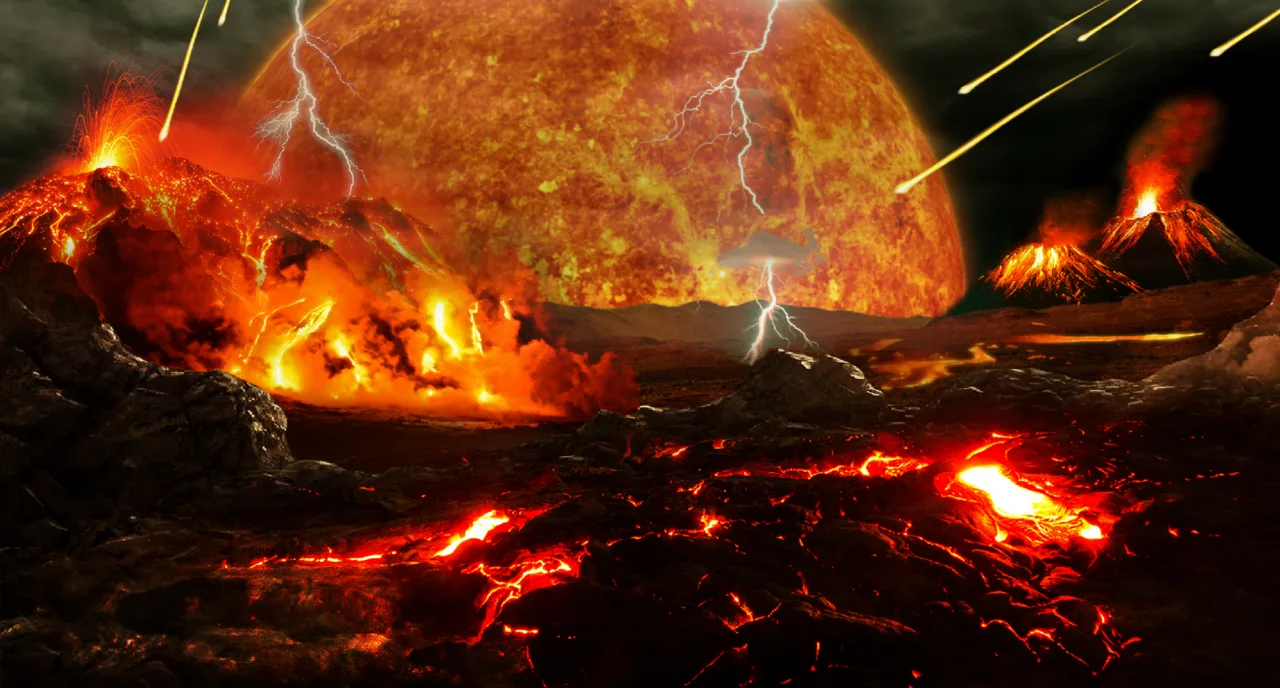
Earth may have produced much of its water while the planet was forming, according to a study in Nature Geoscience. The proposed source is a reaction between rocky pebbles and the hydrogen-rich atmosphere around the young planet.
The work was led by graduate student Susmita Garai at the University of New Mexico, with Zachary Sharp, professor and director of Earth and Planetary Sciences, and Peter Olson. The team ran high-temperature experiments on iron-bearing silicate rocks and atmospheric hydrogen.
The usual explanation
One leading idea holds that water arrived from far away, in water-rich material such as icy pebbles from the colder parts of the early solar system. Questions remain over how that water travelled so far and whether it can explain Earth's chemical makeup.
"Previous ideas about the source of water to Earth rely on an external source, such as comets or meteorites," Sharp said. "Here we show that virtually any Earth-sized planet should have water by this newly identified mechanism."
What the experiments showed
Small rocky pebbles gathered to build the planet in a process called pebble accretion. Once the planet was massive enough, it could hold a hot, high-pressure atmosphere rich in hydrogen. As silicate pebbles fell through it, iron oxide in the rock could react with hydrogen. The products would be metallic iron and water vapor.
The researchers heated rock samples to between 1,200°C and 1,400°C in streams of hydrogen and, for comparison, helium. Runs lasted from 15 minutes to three hours. In hydrogen, nearly 80% of the iron oxide turned into metallic iron and made water vapor. Helium did not trigger the reaction.
Sharp said Garai found that water forms in just minutes under these conditions. Extrapolating the results suggests that hundreds of oceans' worth of water were likely produced this way, he said. "We were quite surprised," he said.
The same process could work on rocky planets around other stars. Sharp noted that pebble accretion has only been discussed for about a decade.
The experiments show a possible mechanism, but working out how much of Earth's water came from it will take more research.
Source: Nature Geoscience