Sahara Meteorite Is a Piece of Mars Over 4.1 Billion Years Old
NASA-funded scientists dated the rose-colored Teghaza 001, found in Mali in 2022, and report that it ranks among the three oldest Martian meteorites known.
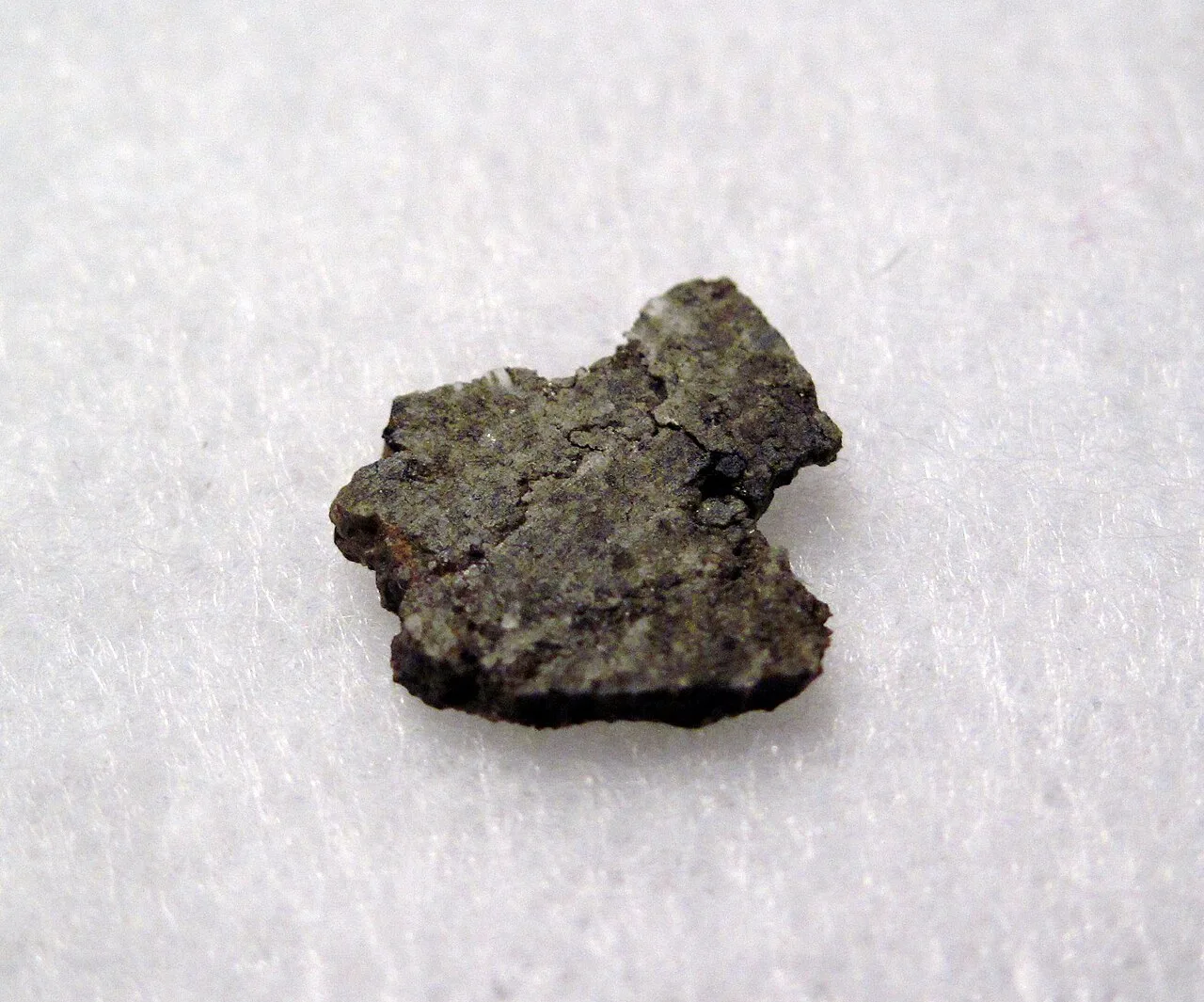
A rose-colored rock found in the Sahara Desert in 2022 turns out to be one of the oldest Martian meteorites ever discovered. NASA-funded scientists dated its minerals and found that the nearly 2-pound (800-gram) stone formed on Mars more than 4.1 billion years ago.
The meteorite, named Teghaza 001 after the salt plain in Mali where it was found, is one of roughly 435 known from Mars. A paper published Thursday in Science gives its first characterization. A separate paper in Science Advances in June covered its water content.
"It was only after we started looking closely that we realized this meteorite is really unique," said lead author Yang Liu of NASA's Jet Propulsion Laboratory. "One of the paper's reviewers called it a Rosetta Stone for Mars."
Different from its ancient peers
Teghaza 001 is one of the three most ancient Martian meteorites found on Earth. The others are ALH84001, which is made almost entirely of one mineral and is similar in age, and "Black Beauty", which formed about 2.1 billion years ago from small volcanic rock fragments.
Teghaza 001 instead holds a mix of igneous minerals. They tell how the planet's crust formed from cooling magma before subsurface water altered it. The mineralogy matches what NASA's Mars Reconnaissance Orbiter has seen in the southern highlands. The paper lists several possible places of origin, but nobody will know exactly where it came from.
"This is really our first piece of Martian crust from a part of Mars we've never had a sample of before," said second author Lee Saper, now at NASA's Ames Research Center. "It records interactions of water and rock and maybe even an imprint of the Martian atmosphere as it was losing water."
How it was dated
University of New Mexico researchers had identified the rock as Martian from its oxygen isotopes. It looked like a shergottite, the most common class, and Liu nearly passed on studying it. She found odd textures, unusual minerals and zircon crystals, which can be used to age-date a sample.
Caltech's Francois Tissot helped apply an in-situ rubidium-strontium method that analyzes single mineral grains. It needed a piece smaller than a fingernail and preserves rare samples. Liu said she was shocked: the rock had been altered by Martian water around 4.1 billion years ago, suggesting it formed even earlier. Clues in the minerals point to a much more dynamic water cycle on early Mars.
"We've only scratched the surface," Liu said.
Source: NASA