NASA's Swift Telescope Set for Uncontrolled Reentry
After a robotic rescue failed to raise its orbit, NASA's Swift observatory is expected to fall to Earth within days. Experts say most of it will burn up and the risk is small.
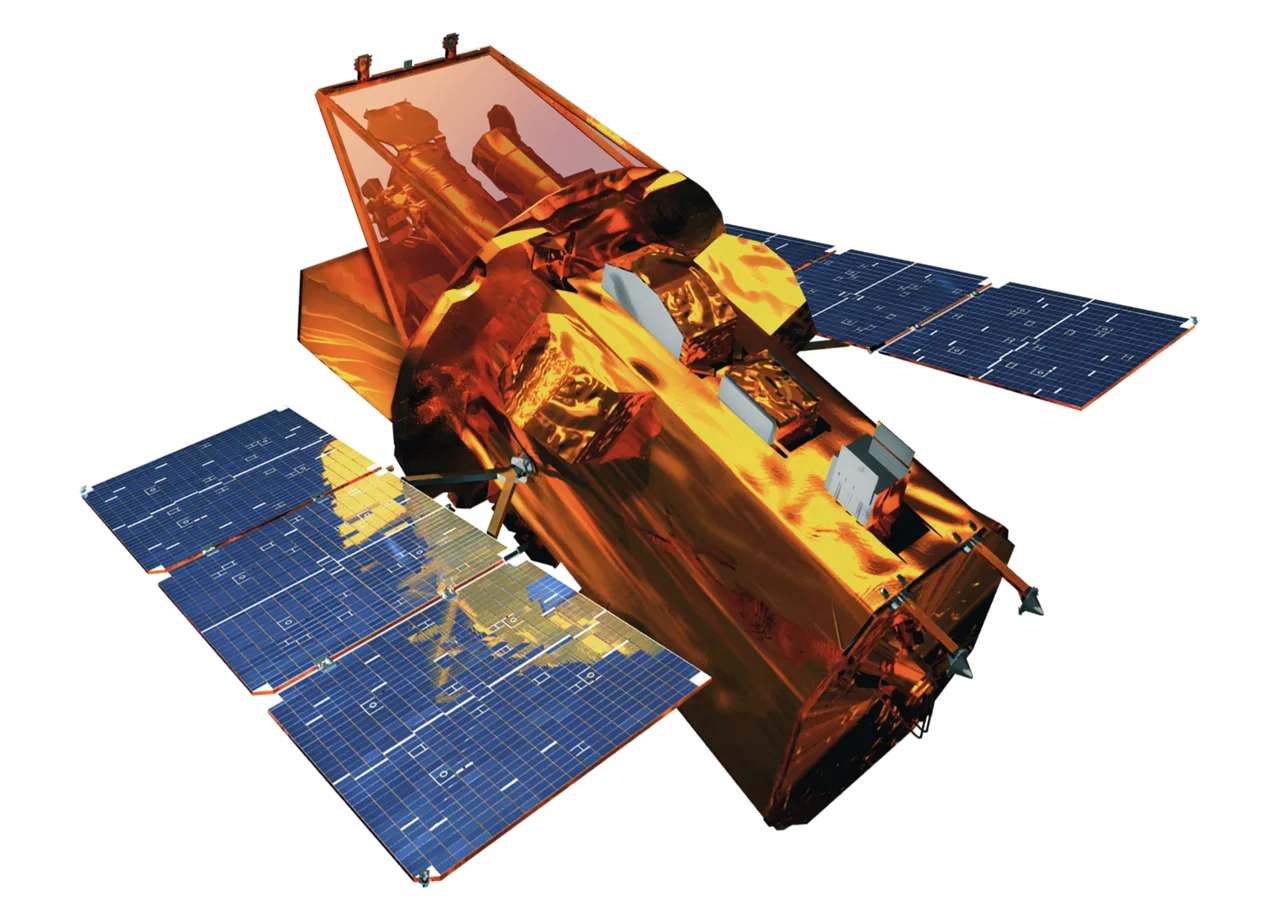
NASA's Neil Gehrels Swift Observatory is expected to come down in the next few days. A robotic mission to lift it to a higher orbit failed, so the reentry will be uncontrolled, and nobody can yet say exactly when or where it will fall.
How Swift got here
Swift launched in November 2004. For two decades it studied gamma-ray bursts, the most powerful explosions in the universe, with three instruments: the Burst Alert Telescope, the X-Ray Telescope and the Ultraviolet/Optical Telescope.
On 20 October NASA reported that the roughly 1,500-kilogram observatory had sunk to 275 kilometres above Earth and could no longer cope with increased drag. It went into safe mode. The operations team at Pennsylvania State University then sent a command that effectively ended its work before the fall.
What is likely to survive
Dean Sladen, an aerospace engineer at the UK components supplier Accu Components, describes how the end usually goes. Once a satellite falls to about 120 kilometres, it typically breaks up within minutes. Air ahead of it heats until the craft glows, and solar panels and antennas tear away first. At around 78 kilometres, the main body breaks apart, and most of it melts and vaporises.
Most of Swift is aluminium, wiring and electronics, which melt early. Pieces that make it down are usually compact and heavy for their size and can take the heat: titanium, steel and glass. Sladen names the six heavy reaction wheels it used to aim itself, plus sturdier optics, the lenses and mirrors. The mask of around 52,000 lead tiles will almost certainly melt. He expects only a handful of scorched fragments, "nothing recognizable as a telescope".
Darren McKnight of the tracking company LeoLabs agrees that Swift will probably break up enough to pose no hazard to people. He says the inner parts of the X-ray and optical telescopes may survive.
Where and how risky
Swift's orbit covers only a band within about 21 degrees of the equator. Most of that band is open sea, but it passes over densely populated areas in Africa, South and Southeast Asia and Latin America.
Sladen says he has found no detailed risk assessment made public for this fall. He notes that NASA's own debris rules cap the chance of a human casualty from surviving debris at one in 10,000. In his view the work has probably been done but not published, and he thinks it should be released. NASA has said harm on the ground is unlikely, and LeoLabs also calls the risk very small.
A growing number of reentries
McKnight says ten times more objects reenter each year than five years ago, because of the surge in low Earth orbit constellations and equipment refresh cycles. His bigger worry is how many massive objects are being abandoned above 644 kilometres.
Sladen points to "design for demise". Many satellites now carry enough propulsion to steer into a remote stretch of ocean, or are built from materials meant to burn up fully. A satellite that cannot meet the one-in-10,000 limit is expected to come down in a controlled way.
Our View
Swift is a small part of the debris problem, and the experts quoted here say it is a low risk. The harder question is why a risk assessment has not been made public, as Sladen says it was for earlier satellites. NASA could settle that. Whether the pieces reach the ocean or land will be known only after the fall.
Source: Space.com