BNEF Lifts US Storage Outlook as Data Centers Place Orders
Interest from hyperscalers has turned into firm battery orders this year, BNEF says in its latest outlook. The consultancy sees the US pipeline at 83.7 GW of storage.
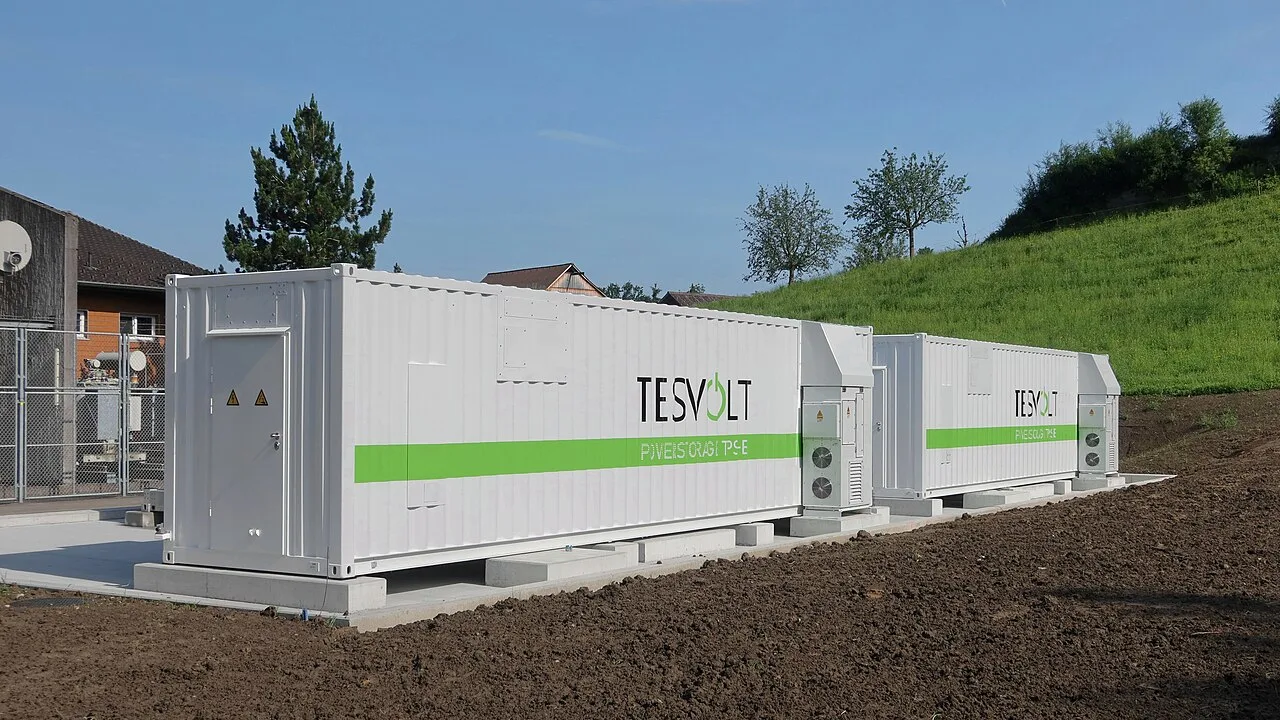
Hyperscalers' interest in energy storage on site or nearby has turned into firm orders this year, according to BNEF. The energy consultancy set out the finding in its latest industry outlook, published last week.
Storage has outpaced solar additions in recent years. The global cumulative ratio of installed solar to storage fell from 94:1 in 2016 to 7:1 in 2026. BNEF expects it to settle at 4:1 in 2030. After that, it sees annual deployments holding at 3:1.
Pipeline in the United States
The US had 20.7 GW and 66.4 GWh of storage colocated with 41.3 GW of solar at the end of 2025. That is about 30% of all colocated solar-plus-storage capacity. In the first nine months of 2026, another 4 GW of storage was colocated with solar.
The One Big Beautiful Bill Act extended federal tax credit eligibility for storage through 2035, while ending solar eligibility later this decade. BNEF says this supports a pipeline of 83.7 GW and 166.1 GWh of storage paired with 149.2 GW of solar.
The pipeline is growing despite trade barriers that BNEF characterised as world-leading. They include import restrictions on foreign-made power conversion systems. The combined duty on stationary storage batteries from mainland China is 40.9%. The report says the US has been making the most aggressive protectionist efforts, favouring domestic battery makers and restricting supply chains that involve mainland China.
Batteries behind the data center fence
On-site data center storage is still a small share of US battery deployment. It is growing fast. BNEF expects 4.9 GW and 7.4 GWh this year, up from 500 MW and 1.4 GWh in 2025. It sees 6.3 GW and 8.4 GWh in 2027.
NextEra Energy plans a 2.6-GW battery array next to a 2-GW gas-fired plant at a proposed $100 billion Brookfield Asset Management computing campus in Kentucky. Fluence Energy signed a $300 million deal with a data center operator for behind-the-meter batteries. In March, Canadian Solar subsidiary e-Storage said it would deliver 500 MW and 2.5 GWh to "a major U.S. utility" in 2027 to support data center grid infrastructure.
Cumulative data center storage could reach 36 GW and 66 GWh in 2036, much of it on grids run by ERCOT, PJM and MISO. In PJM, data centers are more likely to use storage for load shifting than behind-the-meter gas, because of tighter limits on power plant emissions.
Lithium-iron-phosphate stays the main chemistry for the next decade, BNEF said. Sodium-ion is forecast to reach 9% penetration by 2036. Google-led experiments with longer-duration batteries, including a proposed 10 MW and 100 MWh zinc battery in West Virginia and a 300 MW and 30 GWh iron-air battery in Minnesota, are too early to count in forecasts.
Source: Utility Dive