South Korea Tightens Exam Checks After an AI Cheating Case
A top scorer in an accountancy exam admitted using a hidden camera and AI. Days before the national university entrance test, the government is adding device bans and phone alerts.
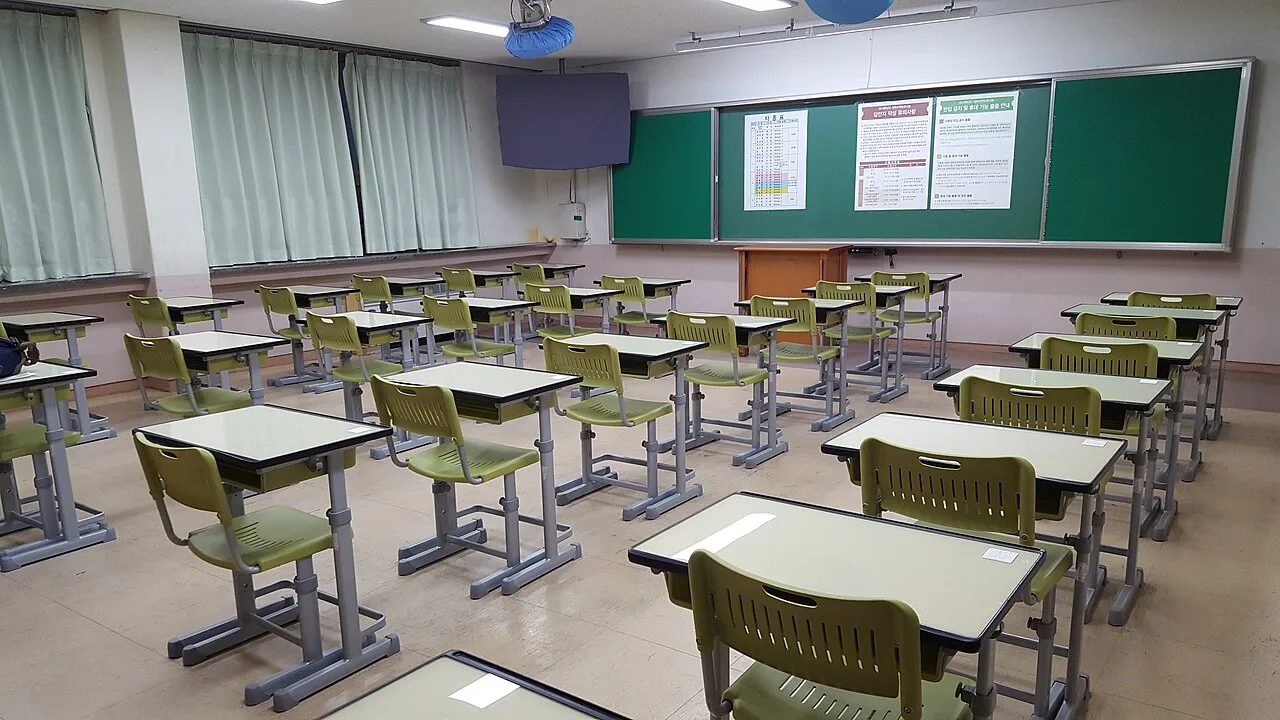
South Korea is announcing new anti-cheating measures days before its university entrance exam. The trigger is the top scorer in a professional accountancy test, who admitted he cheated with a hidden camera and AI.
A near-perfect score that was not earned
The top scorer in this year's tax accountancy exam missed only one of the 160 questions. On Sunday he said AI had done the work. In a video on his lawyer's YouTube channel, he said he had used a tiny hidden camera to capture the questions, fed them into an AI tool and then copied the answers that appeared on his phone.
His lawyer gave police a camera, a laptop and a phone. Nobody has been charged yet. The prime minister has ordered a process that would cancel his result and ban him from the exam for five years.
The confession led national news over the weekend and raised doubts about how secure the suneung is.
He also spoke directly to the students heading into the larger test. Anyone tempted to copy him, he said, should know that "I am going to tell the investigators everything", so they should not count on escaping notice.
One day that decides a university place
The suneung is the national entrance exam, and its result sets which university a candidate can attend, and with it their prospects. On Thursday, over 500,000 candidates, most of them still at school, are expected at 1,312 centres. They face eight hours of testing in a single day.
The country bends its routines around that day. During the 25-minute English listening paper, planes are held back from taking off or landing so that noise stays low, and artillery fire and tank movements stop. Trading on the stock exchange starts an hour later than usual, and no car gets within 200 metres of a centre. Trains add services from 6am, police give latecomers a lift to the halls, tourist sites open late and offices are asked to start work at 10am.
Smart glasses are the hard part
Smart glasses, which can pass for ordinary frames, have been banned from exams since the end of June. Several candidates were still caught wearing them in October, at admissions tests run by universities. For the suneung the rule is strict: a candidate wearing a pair is treated as using it, power on or off.
The education ministry considered radio-frequency equipment to detect the glasses. It decided that conditions differ too much from venue to venue to rely on it this year. Each centre will instead get at least one official dedicated to visual inspection. Education minister Choi Kyo-jin told parliament on Monday that glasses now on sale can be screened out, but newer models cannot be dealt with perfectly. Choi has ruled out a postponement, though the exam has been pushed back before: in 2017 after an earthquake in Pohang, and in 2020 because of Covid.
Teachers' unions say the government reacted late. In a survey last month of 2,716 secondary school teachers by the Korean Teachers and Education Workers Union, 82.3% said they could not tell if a candidate wore smart glasses under today's procedure. Only 3.5% said they could. Some candidates are reportedly moving to contact lenses to avoid scrutiny, and an optician in Suwon said students who had never worn lenses were coming in to learn how to put them in.
What the government is ordering for exam day
Prime minister Han Seong-sook told a cabinet meeting on Tuesday that AI-assisted cheating is a "social evil" that the government will root out. She said the education ministry and other agencies should approach the task as if their jobs were at stake. Candidates must hand in their smart devices switched off, and any bag left in a corridor will be checked for a device that is still switched on. Officials will look over glasses, watches, collars, sleeves and buttons for hidden cameras.
Every phone in the country will receive an emergency alert at full volume that cannot be silenced, meant to catch anyone who kept a device.
The government is also readying a shutdown of school wifi in the exam centres and of public wifi around them. Personal hotspots cannot be blocked, so they will be traced through connection records. More invigilators will be on duty.
On Monday Han wrote on X that the checks would be handled carefully so that candidates acting in good faith are spared needless anxiety and inconvenience.
Source: The Guardian