EU Chamber Chief Warns Firms May Quit Competing With China
The head of the EU Chamber of Commerce in China says European manufacturers could give up the fight by 2030. He argues some may need to join Chinese supply chains.
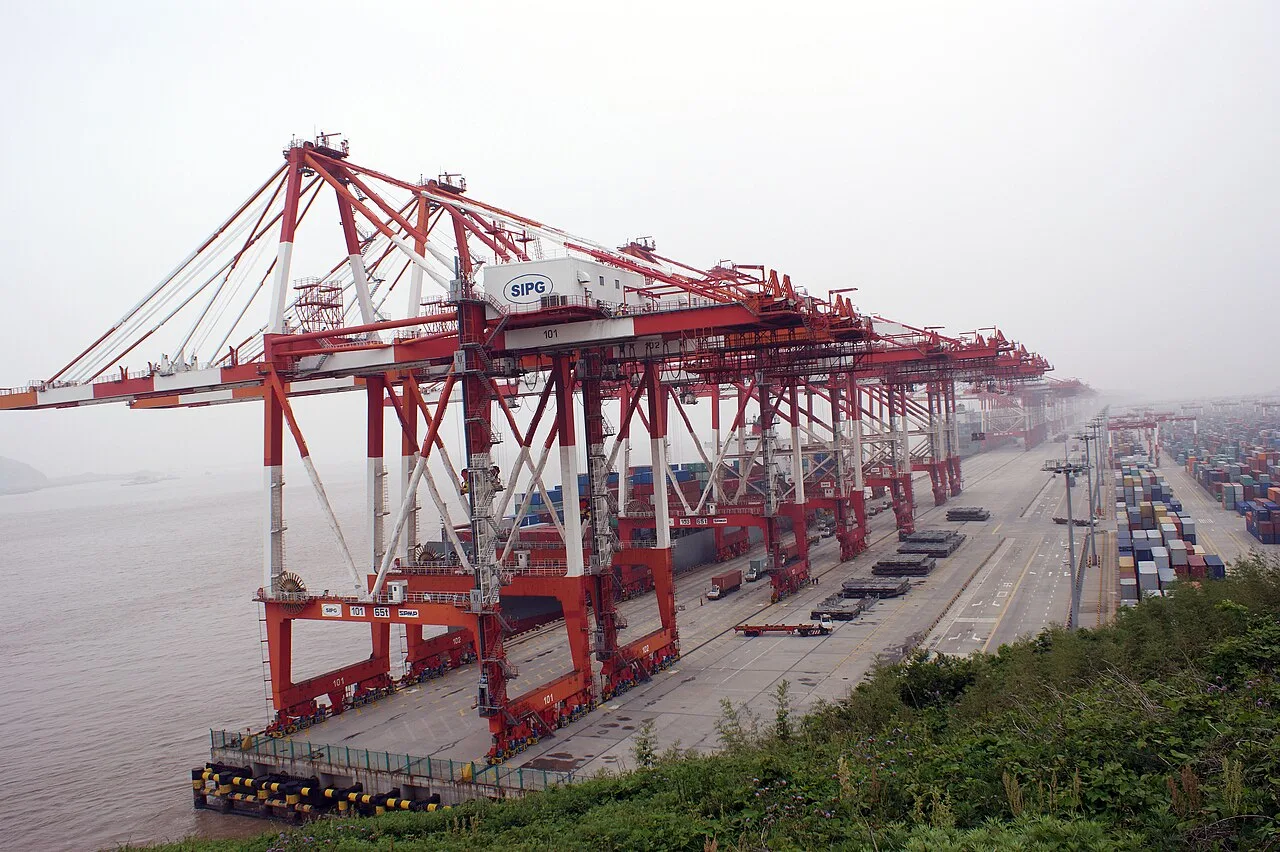
European manufacturers could stop trying to compete with Chinese rivals by the end of the decade, warns Jens Eskelund, who heads the European Union Chamber of Commerce in China. His proposed answer: let European firms become part of Chinese supply chains.
Why competing is so hard
Eskelund said many companies still make good money in China. But supply-chain competition there is brutal, and the currency is undervalued by about 30%. "It's just very, very difficult in most industries to compete with the Chinese," he said.
In almost every industrial vertical, he added, a company meets one and probably several Chinese competitors almost anywhere in the world.
From "for China" to "for the world"
The chamber has found that some firms now see a way to compete: become part of the Chinese supply chain. That could mean making products in China in joint partnerships with European companies, and reaching global markets alongside Chinese firms.
The old model was to come to China and serve the Chinese market. The new one, he said, is to be in China for the world. He called it a fairly significant shift. Many of his members report an uptick in confidence in the past year. Some, he said, explore exports because the Chinese market is saturated.
What Beijing has written down
Eskelund does not like the phrase "China shock 2.0". In his view the trend should not surprise anyone, because Beijing has written import displacement, meaning the replacement of foreign goods with domestic ones, into its last three five-year plans, since the Made in China strategy was agreed in 2015.
A report by the Centre for European Reform says the 2026-2030 plan doubles down on self-reliance. Its listed sectors are AI, quantum computing, robotics, smart and green tech, biomanufacturing, brain-computer interfaces and 6G.
His advice to Europe's affected industries is not to hide but to brace for China to deliver. Once Beijing settles on a strategy, incentives, tax breaks and subsidies reach the regions, then towns and villages. Officials everywhere know where to put their effort.
Numbers behind the warning
Eskelund also serves as a managing director for the Chinese operations of the shipping group Maersk.
Eskelund spoke in Brussels, where he has been meeting European Commission officials to pass on feedback from Beijing. He called Europe's position an inflection point. The EU's trade deficit with China is running at a record £1bn (€1.18bn) a day, and protectionist sentiment is rising in Brussels, Berlin and Paris.
He cited a Goldman Sachs report forecasting that Chinese exports will cut EU gross domestic product by 0.5% by the end of the decade. For Germany the cut is up to 0.9%. If trade destroys value for one side while creating it for the other, he said, countries will start asking why they trade at all. He described a worst case of vanished manufacturing, mass job losses and a collapsing tax base.
For EU leaders, he urges engagement with China to reach a point where both sides see value created. He argues that Europe focuses on principles while China focuses on outcomes. The idea that the imbalance can be fixed by exporting more is, he said, a fantasy. China's surplus against the rest of the world is expected to pass last year's record $1.2tn.
Where the strain already shows
The pressure is already beginning to show in Europe's car, chemicals and renewable energy sectors. German carmakers earn less in China and face cheap competition at home from BYD, Geely and SAIC Motor. Last week BMW said its China sales fell 22% in the first nine months of the year. It issued its second profit warning of 2026.
Source: The Guardian