Exelon Weighs Up to $7bn for Utility-Owned Storage
Exelon says its utilities could spend $3 billion to $7 billion on regulated storage, while its CEO warns that the PJM grid is adding generation too slowly.
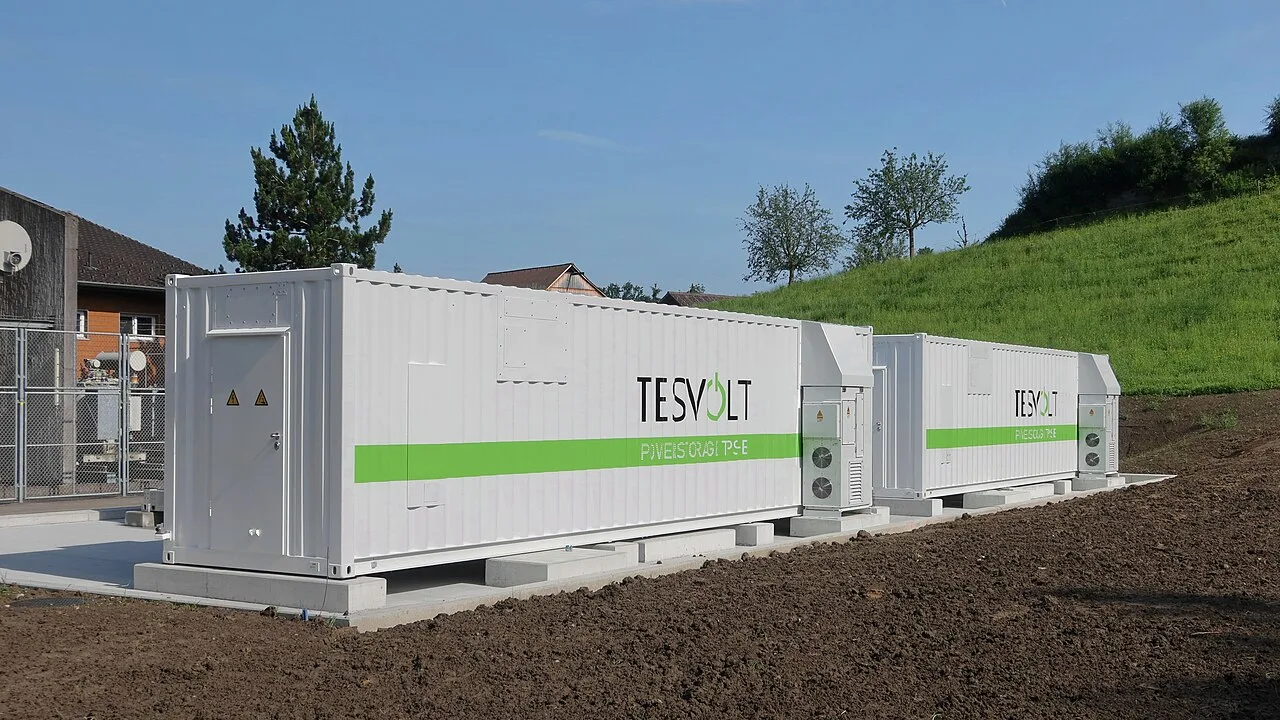
Exelon, which serves close to 11 million customers through six utility subsidiaries, says its utilities could spend $3 billion to $7 billion on regulated energy storage. The company ties the idea to a concern about the PJM grid, where, in the view of its chief executive, new generation is not arriving fast enough.
PJM's slow additions and the delayed fixes
PJM is the grid operator that coordinates power supply across the Mid-Atlantic and Midwest. CEO Calvin Butler called the slow addition of generation the biggest issue facing consumers there. He argues that Exelon's own plan to invest in storage and transmission can help address it.
Two PJM initiatives were meant to help: a backstop capacity procurement plan and an Interim Resource Adequacy Service proposal. The Federal Energy Regulatory Commission approved both only in part, which delayed them. Butler said both were important steps, but neither would have resolved reliability and affordability for customers.
Why Exelon favors regulated ownership
Regulated storage means a utility owns the battery and recovers its cost through rates that state regulators oversee, rather than a private developer selling into the market. CFO Robert Kleczynski noted that three states where Exelon utilities operate, New Jersey, Maryland and Delaware, allow utilities to own storage that supports grid resiliency.
He told investors that customers would gain from lower capacity prices. Investment tax credits passed through to them would soften what the assets add to electricity rates.
Kleczynski also argued that regulated storage gives certainty that projects get built, and control over when and how they are deployed. He framed it as an addition, not a swap. "We view utility-owned storage as one option alongside competitive development, not a replacement for it," he said.
A 500-MW battery in New Jersey
The $3 billion to $7 billion range, covering 1.5 GW to 3.5 GW, leaves out one project that is already proposed: a $1 billion, 500-MW battery in New Jersey.
It is Atlantic City Electric's project, developed with Invenergy. At 500 MW it would be the biggest battery project on the PJM grid, and Kleczynski said it is expected to deliver more than $700 million in net benefits to customers. Exelon expects the New Jersey Board of Public Utilities to rule late in the first quarter of next year.
Transmission, large loads and quarterly results
Third-quarter income fell to $729 million from $875 million a year earlier, partly because of higher rate-case writeoffs and larger storm and interest costs. Revenue rose to $7.3 billion from $6.7 billion. Adjusted income, which leaves out one-time factors, edged up to 87 cents a share from 86 cents.
On large loads, the "high-probability" additions stayed at 11 GW, with 9 GW in northern Illinois and 2 GW in the Mid-Atlantic. The wider future pipeline slipped to 23 GW from 25 GW in the previous quarter.
On transmission, the current plan calls for $16.3 billion through 2029. The Chicago-based company sees room for another $12 billion to $17 billion beyond it, including infrastructure for large loads.
A Jefferies equity analyst called the results and the possible storage and transmission spending, on top of a $41.7 billion capital plan, favorable. The analyst also warned that unclear regulation in 2027 weighs on the outlook and could cancel out added earnings from new capital spending.
Our View
The storage range is a menu of possibilities, and New Jersey is the first test. A decision on the 500-MW battery late in the first quarter would show how regulators in a PJM state treat utility-owned storage. The analyst's 2027 caveat points to the other open question: whether the regulatory treatment of new spending will let it lift earnings at all.
Source: Utility Dive