GOP Attorneys General Appeal Block on Postal Ballot Rule
A federal judge's order blocks the Postal Service ballot rule for every federal election, 2028 included. A dozen states are challenging it, and the Justice Department is not.
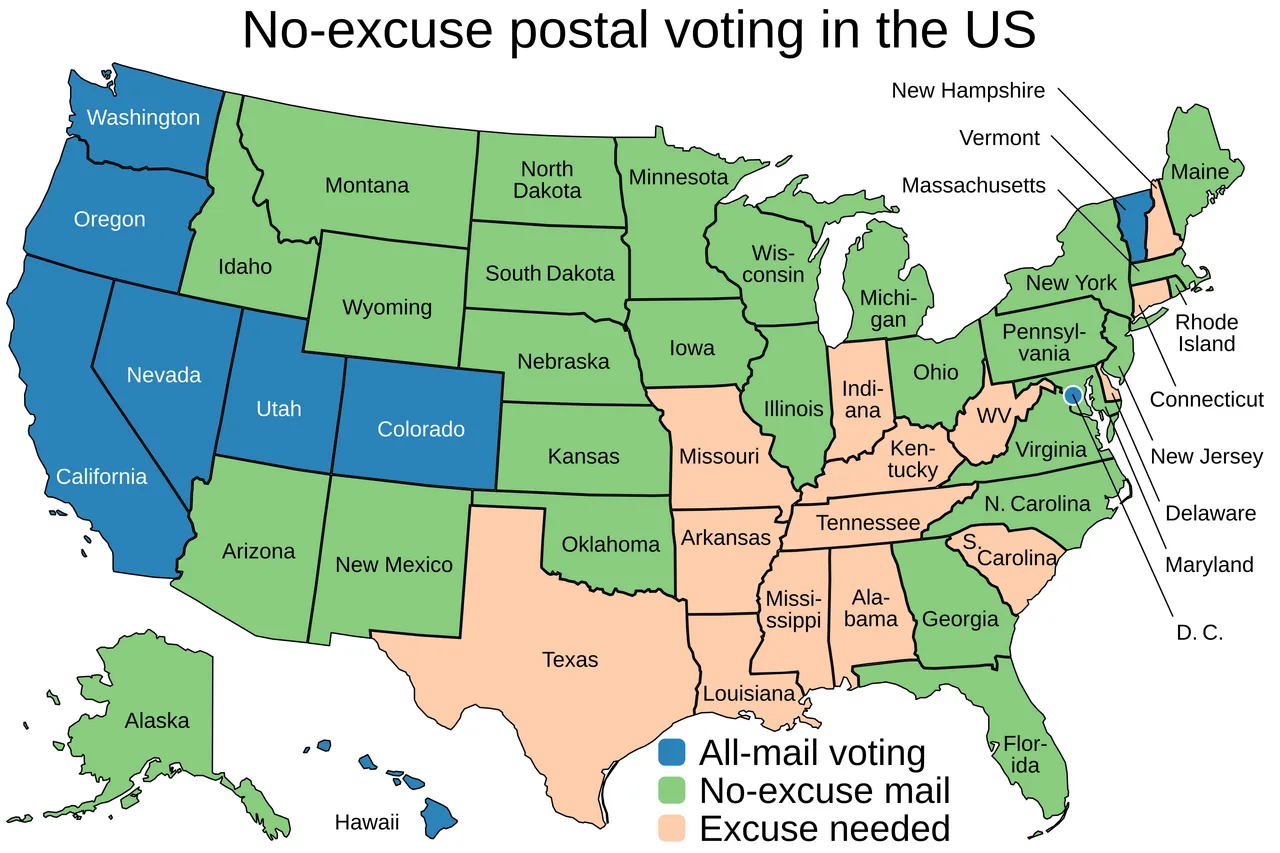
Twelve Republican state attorneys general have started an appeal to bring back a Trump-backed plan to restrict mail-in voting, with the 2028 election in mind. The federal government is not appealing the ruling that stopped it.
The states left holding the case
The attorneys general come from Alabama, Florida, Indiana, Kansas, Louisiana, Missouri, Montana, Nebraska, Oklahoma, South Carolina, South Dakota and Texas. NPR notes it is unclear how long some of them will stay in the case after the Democratic wins in the midterms. Democratic candidates are due to take over the attorney general's office in both Texas and Kansas in January.
Justice Department lawyers confirmed in a court filing that the administration will not appeal. The deadline for doing so was Thursday. The states began their own challenge that same day.
Two courts, one blocked plan
The states are challenging a September order by U.S. District Judge Carl Nichols, one of two judges who barred the Postal Service from putting into effect a plan drawn up after an executive order from President Trump. His preliminary injunction covers all federal elections, 2028 included.
The other order came from Judge Indira Talwani in Boston. It was narrower and stopped work on the revised rule only for this year's midterms. The Supreme Court refused in September to pause it.
Nichols is a Washington judge nominated by Trump. He found the agency likely lacks the power to impose the rule on states. He wrote that "no statute grants the Postal Service the power to issue key parts of the Rule."
The rule and the fears behind the fight
The Postal Service released the rule in late August. It would require states to hand over lists of voters' names and addresses if they want those voters' ballots delivered by the Postal Service.
The earlier push to apply it to the midterms alarmed many election officials. They feared last-minute changes would disrupt the tens of millions of people who regularly vote by mail. They also worried that some voters with disabilities or living far from polling sites might have been unable to vote.
According to a whistleblower report, the online system that officials would have relied on had not been properly tested. It said many eligible voters might not have received their ballots in time, or at all.
Justices Samuel Alito and Clarence Thomas dissented when the Supreme Court halted the rule for the midterms. Justice Brett Kavanaugh agreed with the outcome but wrote that local officials lacked time to implement it. He added that "there is at least a fair prospect that the final rule falls within the Postal Service's statutory authority."
Source: NPR