Voyager 1 Will Reach One Light-Day From Earth on Nov. 18
NASA says its interstellar probe will be one light-day away on November 18. A radio message will take 24 hours to reach it, and the same time again to come back.
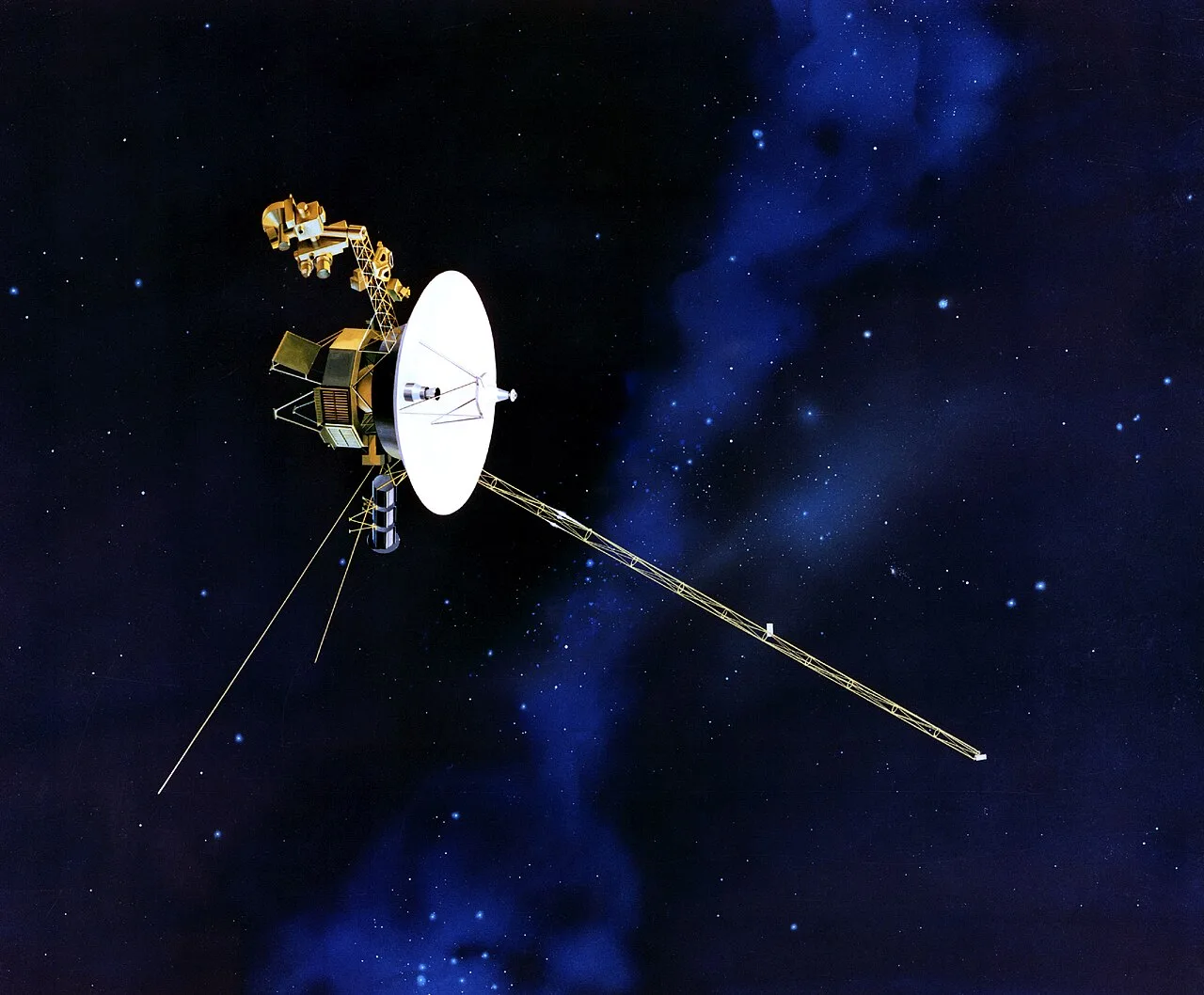
On November 18, Voyager 1 is due to be one light-day from Earth, a distance NASA calls a milestone nearly 50 years after launch.
One light-day from home
The crossing is set for 5:16:07 a.m. EST. NASA's own words for it: "a huge milestone by any measure, and a day worth celebrating." The spacecraft will be 49 years, two months and 11 days old.
A light-day is the distance light travels in a day. Radio waves cover it in 24 hours, so a message sent to Voyager 1 arrives a day later, and the reply needs another day to come back. The probe is about 16 billion miles (26 billion km) from Earth, the farthest of any spacecraft.
During the crossing, Voyager will be in contact with the Madrid station of the Deep Space Network, which has three antennas and monitors all deep-space missions. Seen from Earth, the probe is moving through the constellation Ophiuchus, according to Jeffrey Hayes, a NASA official whose work includes Voyager 1.
Hayes, discipline scientist in the agency's astrophysics and heliophysics divisions, said the milestone kicks off a year of celebrations leading up to the 50th anniversary in August and September next year. He spoke in a livestreamed discussion with NASA's Night Sky Network on November 4.
A mission that outlived its plan
Voyager 1 launched from Kennedy Space Center in Florida on September 5, 1977, a few weeks after its twin, Voyager 2. Voyager 2 is 13.5 billion miles (21.7 billion km) away and will not reach the light-day mark until 2035, NASA stated.
The two craft first had funding to survey Jupiter and Saturn. They were launched when the planets were aligned so that Voyager 2 could pass Uranus and Neptune if funding continued, and it did. Voyager 1 took a turn at Saturn to look at the rings and at Titan, then used maneuvers that took it high above the plane of the solar system.
Hayes said the engineers who designed the probes likely never expected them to last 50 years, though the craft carry many backup systems. NASA's Jet Propulsion Laboratory manages the mission and wants to keep getting the most science out of it. The cost from launch to Neptune, from 1977 to 1989, was $865 million, with $30 million more budgeted for the extended mission.
Managing power and cold
Both nuclear-powered probes still send data from interstellar space, but shrinking power has forced engineers to shut off instruments and look for other savings. One example was a large power swap this year on both craft, called the "Big Bang."
The probes lose four watts of power per year, from an initial 470 watts each. Hayes also said propellant is a worry: hydrazine is prone to freezing, which he said would mean "game over." He called the craft fragile, given their age and the cold, only a few degrees above absolute zero.
NASA has not offered recent estimates of how long they will last. In 2022, Voyager project manager Suzanne Dodd said they may operate into the 2030s.
Voyager 1's next target is vaguely near the star Gliese 445, 17 light-years away in Ursa Minor. The flyby, at a distance of 1.7 light-years, is due in 40,000 years, long after the nuclear power runs out.
Source: Space