China Lays Out Four Steps to a Crewed Moon Landing
Chinese officials have shown the steps they plan before astronauts land on the Moon, with a crewed landing set for before 2030.
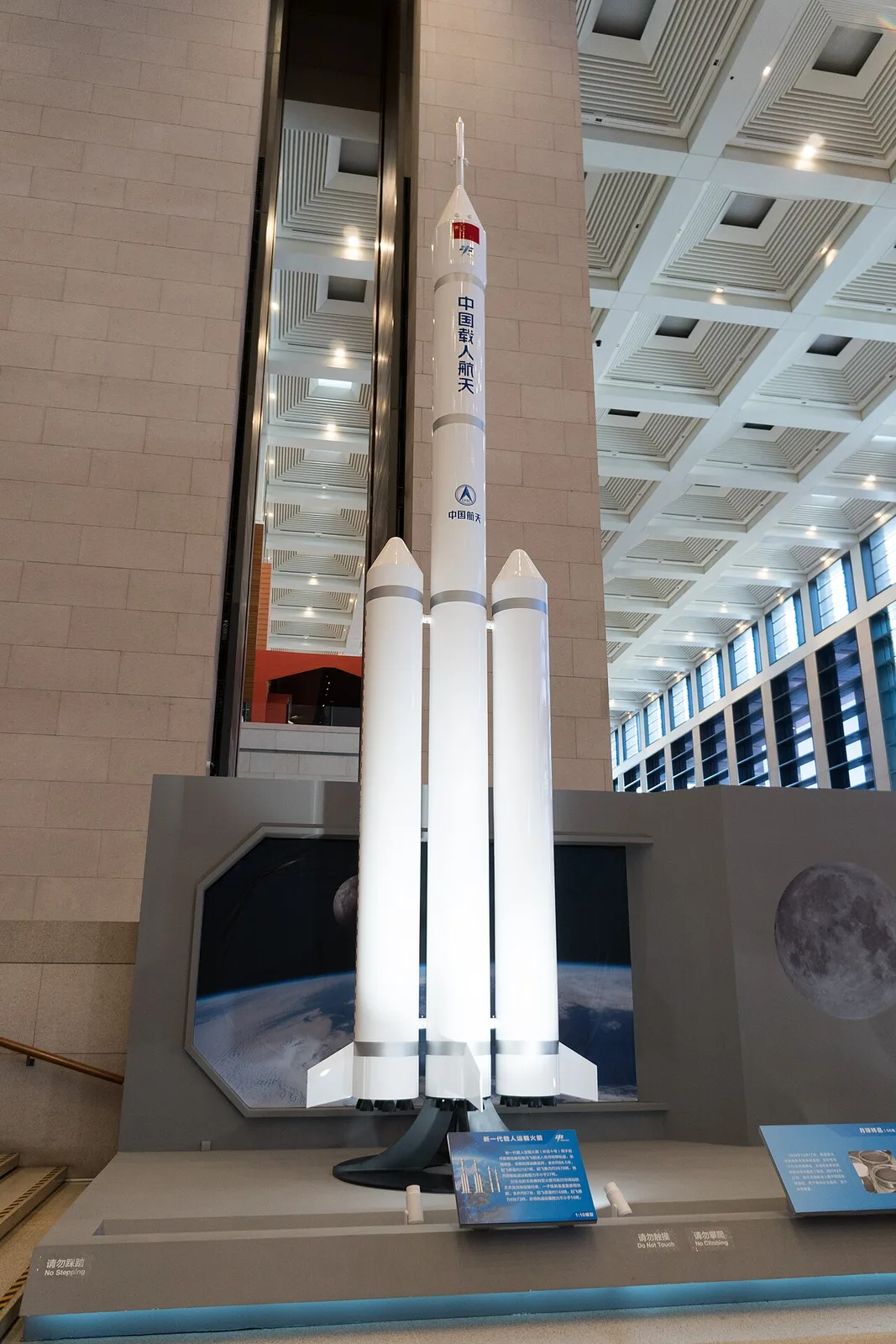
China has put dates on its road to the Moon. Officials say the first step is a test flight in early 2027, and the crewed landing comes "before 2030".
A schedule shown in Beijing
The details came out this weekend at the Seventh Manned Spaceflight Conference in Beijing. Wang Xiang, chief designer of the lunar exploration program, was among the officials who presented. According to slides shared on social media, the plan is the most detailed public account so far.
The plan has four stages. Early 2027 brings an uncrewed test of the Long March 10A rocket, a single-core version with no side boosters, carrying the Mengzhou spacecraft to low Earth orbit.
In 2028 the larger Long March 10, a core stage with two boosters, is to fly the Lanyue lander. That test includes a descent to the lunar surface and a climb back off it.
In 2029 two Long March 10 rockets launch together. One carries an uncrewed Mengzhou and the other carries Lanyue. The two craft are to dock in lunar orbit. The last step is the same pair of launches, this time with astronauts aboard Mengzhou, ending in a crewed landing.
Two launches instead of one
The mission design resembles the lunar-orbit rendezvous that NASA used in the Apollo years. One difference comes from the hardware. China has no rocket as strong as the Saturn V, so the crew and the lander go up separately and meet near the Moon.
The schedule leaves out a crewed flight around the Moon without landing, like Apollo 8 or Artemis II. Mengzhou should still carry people in lower orbit, on trips to China's Tiangong space station.
How far along the hardware is
Outsiders see little of China's technical milestones. Some are visible, though. In August 2025 the China Manned Space Agency tested a high-fidelity mock-up of the 26-ton Lanyue lander. Tethers simulated lunar gravity while the vehicle fired its engines and landed on a cratered test surface near Beijing. The Mengzhou spacecraft for the 2027 flight has also arrived at the Wenchang launch site in Hainan.
The American side of the race
NASA's target is a crewed landing by 2028, about a year ahead of China. The United States has a more established rocket and crew capsule, the Space Launch System and Orion. The main open question is the lander, which SpaceX and Blue Origin are building under multibillion-dollar contracts. If those projects slip, a US landing could move to 2030 or later.
Washington has been reshaping the program. NASA Administrator Jared Isaacman has cancelled the Lunar Gateway station and planned upgrades to the SLS rocket. Last week he announced a plan to help Blue Origin by finding a way to push Orion into low lunar orbit. "We have the mandate, we have the resources, and the support from our stakeholders to be able to execute," he said then.
Both countries also want a long-term presence near the Moon's South Pole. Isaacman has committed NASA to a surface base over the next decade.
Our View
Publishing a dated plan makes China's progress easier to check. The 2027 and 2028 tests are the first points where slides can be compared with hardware. On the American side, much may depend on the lander. Delays at SpaceX or Blue Origin could matter a great deal.
Source: Ars Technica