Webb Finds Heavy Hydrogen in Comet 3I/ATLAS's Methane
Methane from the interstellar comet 3I/ATLAS holds more heavy hydrogen than any methane measured in the solar system. Astronomers read it as a sign of a very cold origin.
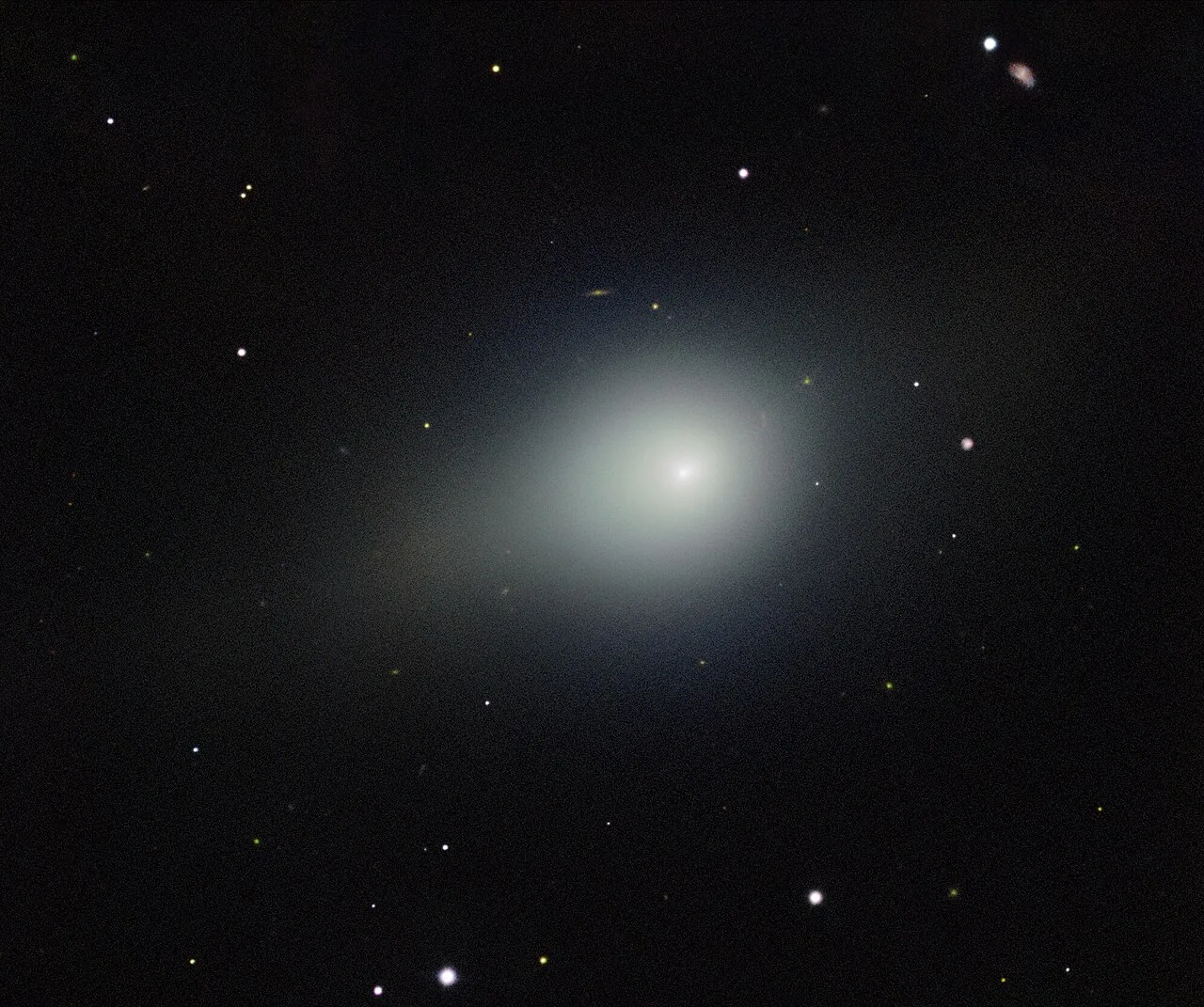
The interstellar comet 3I/ATLAS is giving astronomers a chemical clue about the system it came from. Its methane is unusually rich in heavy hydrogen, which points to ice that formed in an intensely cold place around another star, or in the cloud that came before that star.
A faint signal found with Webb
Nathan Roth of American University and NASA's Goddard Space Flight Center and colleagues made the measurement. They used the James Webb Space Telescope, which looked at the comet on 22 and 23 December 2025. At that moment it was roughly 2.4 times farther from the sun than Earth. The team analyzed infrared emission from the coma, the gas envelope of the icy nucleus.
The task was hard. Methane that carries heavy hydrogen, called deuterium, gives a much fainter signal than ordinary methane. Deuterium is hydrogen with an additional neutron in the nucleus, so a molecule that contains it shows a different infrared signature. The team first removed the light of other gases using models, then hunted for the weak deuterium lines in the gaps between ordinary methane's bright ones.
The result was a deuterium-to-hydrogen ratio of about 3.2% in methane. That is roughly 13 times the ratio in comet 67P/Churyumov-Gerasimenko, which probably came from our own solar system. "This D/H ratio exceeds any other value for methane measured in the solar system," the authors write. The work appears in Nature Astronomy.
Why a neutron says something about birthplace
In very cold gas, some chemical reactions favor putting deuterium into molecules. At around 10 kelvin, the processes that would reverse this enrichment become weak. Once that happens, interstellar dust grains can collect icy coats rich in deuterium, and such ice may end up in a comet.
Deuterium-bearing methane has been found in just one other comet, 67P, and only after the Rosetta spacecraft flew close to it. Webb saw the molecule in 3I/ATLAS from a distance.
Methane against water
The methane ratio is about three times the one measured earlier in the comet's water. The researchers suggest the methane may have formed later, once the surrounding chemistry had been given longer to build up its share of heavy hydrogen.
They argue the result fits a proposed origin in a cold cloud, or in the surroundings of a forming star. Such a place would be poor in heavy elements and bathed in cosmic rays, and the fast particles help trigger the reactions that load molecules with deuterium.
A plausible history, not a verdict
The finding gives a likely history, not a pinpointed birthplace. Nobody has measured this ratio in methane directly in distant star-forming regions, and the handful of chemical models that give an estimate land below Webb's value.
Our View
Models of ice chemistry around young stars now have a number they must reproduce. Comparison data from distant star-forming regions are missing for now, so the cold-origin reading rests on a single comet.
Source: Phys.org