NZ Astrophotographer Defends Satellite Image From AI Claims
Brendan Larsen's photo of about 1,400 satellites over Mount Taranaki went viral, and some viewers called it AI. He says it took 578 exposures and about 40 hours of editing.
New Zealand astrophotographer Brendan Larsen made a night-sky image so dense with satellites that it is now being accused of being AI-generated. He is fighting those claims, and he wants the picture to start a debate about the sky itself.
A sky he sees changing
Larsen has photographed the night sky for six years. As a child he was "absolutely blown away" by the number of stars over parts of rural New Zealand. Over the years of shooting he has noticed more light pollution and more satellites.
Among roughly 10,000 comments on his Facebook page, he says, nine in ten call the photo beautiful but also horrifying and concerning for what is happening to the night sky.
About 16,000 working satellites circle the planet. So do tens of thousands of defunct spacecraft, rocket parts and debris from payloads breaking up. Studies warn that metal particles left by launches and reentering satellites may alter the chemistry of the atmosphere, including the ozone layer. The UN has warned that more space activity brings risks to ground safety, darkness and astronomy.
Satellites do not yet overwhelm the sky for a person looking up with the naked eye. Larsen worries about the future all the same, and hopes the image will prompt reflection on responsible use of satellites.
From viral post to AI claims
Larsen put the image on his social media channels in mid-October. It won him 15,000 new followers, tens of millions of views and thousands of comments.
Some viewers dismissed it as AI. He understands why, since AI software has become so good that real and generated images are hard to tell apart, especially for people who do not know the location or astrophotography. Still, he finds it frustrating. He is also annoyed that AI tools have copied the picture and produced versions with clear errors.
Anticipating the backlash, he recorded his creative process on video. He hopes the video will also help viewers feel an emotional connection to the landscape.
How the picture was made
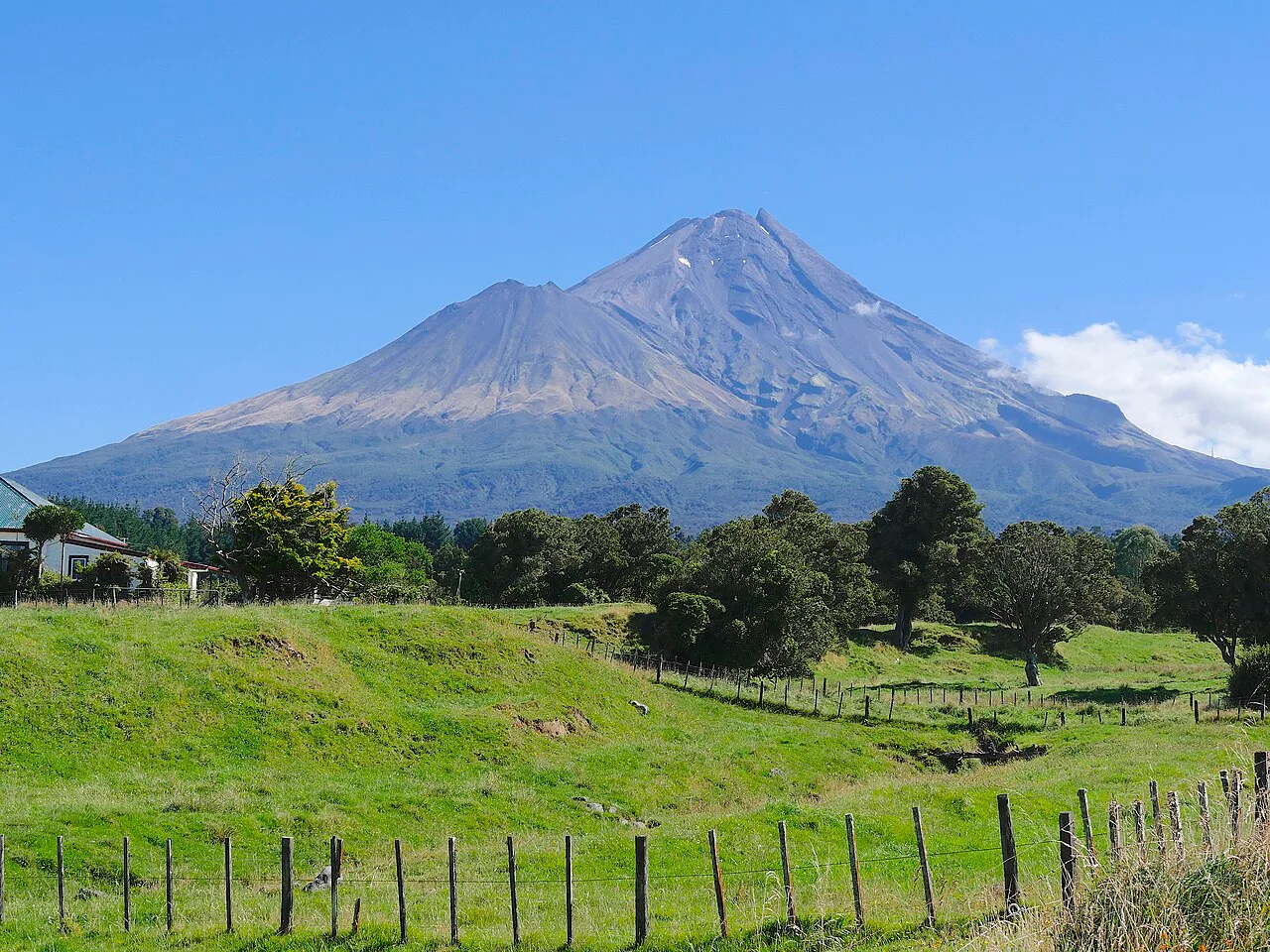
In September, Larsen spent two hours photographing the sky over Mount Taranaki in the North Island. His camera took eight-second shots with a two-second gap between them. It captured 578 frames. "That was the easy part," he says.
Each frame contained about 25 satellites. He layered them in Adobe Photoshop over about 40 hours, much of it spent erasing stars to reveal the satellites.
In the final image, about 1,400 satellites leave 14,000 trails that cut across one another over the mountain.
Our View
A stack of 578 frames is a composite, and a composite can look unreal even when each frame is genuine. Larsen's process video is the evidence open to doubters. What a groundswell of support for protecting the night sky would look like in practice is something he does not describe.
Source: The Guardian