Voyager 1 Recovers After Two Days of Silence
NASA's most distant probe stopped responding for about 48 hours in October. It fixed the glitch itself before engineers sent a repair.
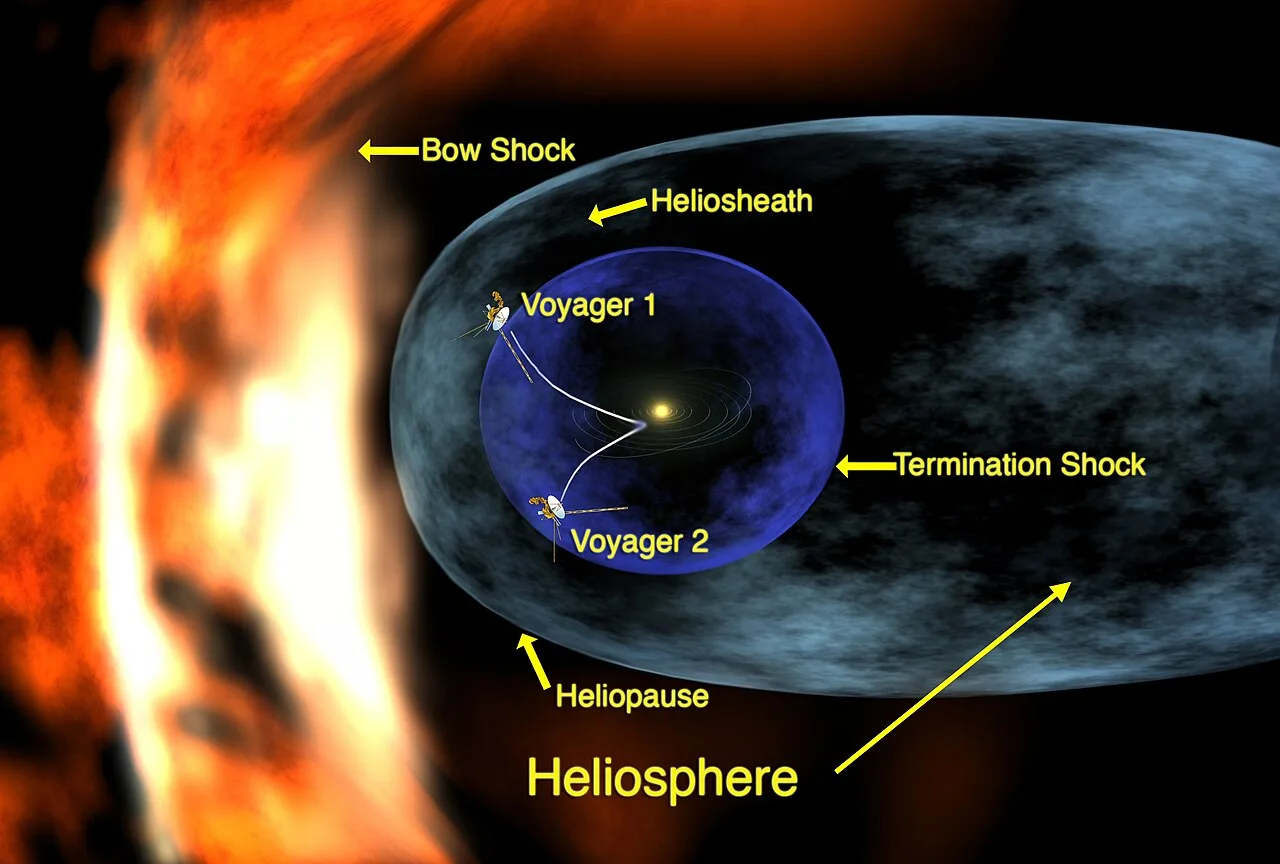
Voyager 1, the most distant spacecraft humanity has built, is talking to Earth again after about 48 hours of silence in October.
A fading plutonium supply
Both Voyagers run on nuclear power, and it is running down. The plutonium power sources lose four watts a year, from 470 watts at launch. Engineers have to shut off instruments from time to time or find other ways to save power.
Voyager 1 just went through one such adjustment, nicknamed the "Big Bang" because it reconfigured several instruments. In early September engineers swapped three devices for lower-power alternatives. Voyager 2 had its own Big Bang about six weeks earlier. Without the change, Voyager 1 might have lost another instrument as soon as next summer. JPL gave no estimate of how long the missions can run. In 2022 project manager Suzanne Dodd said she hoped for operations into the 2030s.
Two probes that left in 1977
Voyager 1 and Voyager 2 launched in 1977 to explore planets. A rare alignment of the planets let them hop from Jupiter to Saturn to Uranus and Neptune without burning much fuel. Money for the outer worlds was not secured when they left Earth. Voyager 1's close view of Saturn's rings and the moon Titan, which may have prebiotic chemistry, sent it on a path far above the plane of the solar system. Voyager 2 went on to Uranus in 1986 and Neptune in 1989, and no other craft has been up close to those systems. Both have been in interstellar space for a few years.
The silence and the backup thrusters
NASA's Deep Space Network, three antennas, checks on the spacecraft. On Oct. 18 and 19 Voyager 1 did not answer. Its signal returned on Oct. 20. A communications glitch caused the gap, and the probe resolved it on its own before engineers could send a remote fix.
The cause is under investigation, and JPL says the craft appears to have entered a sort of safe mode. So far the team has traced the gap to one group of thrusters going offline, with backups taking over. That handover is built to start by itself once the onboard computers spot a fault in the active set.
Mission manager Kareem Badaruddin said it was the first time the spacecraft had done anything like this, adding that the mission has reached a point where the team has to expect the unexpected.
Distance adds its own delay. Voyager 1 is nearly one light-day away, so a command needs close to a day to arrive and the reply about as long to return. It reaches the light-day mark on Nov. 18, at 16.09 billion miles (25.89 billion kilometers) from Earth.
Source: Space