London's Unsold High-End Flats Pile Up as Developers Retreat
Zone 1 has three times as many finished but unsold homes as in 2016, while new starts have fallen 75% in a decade and several developers have collapsed.
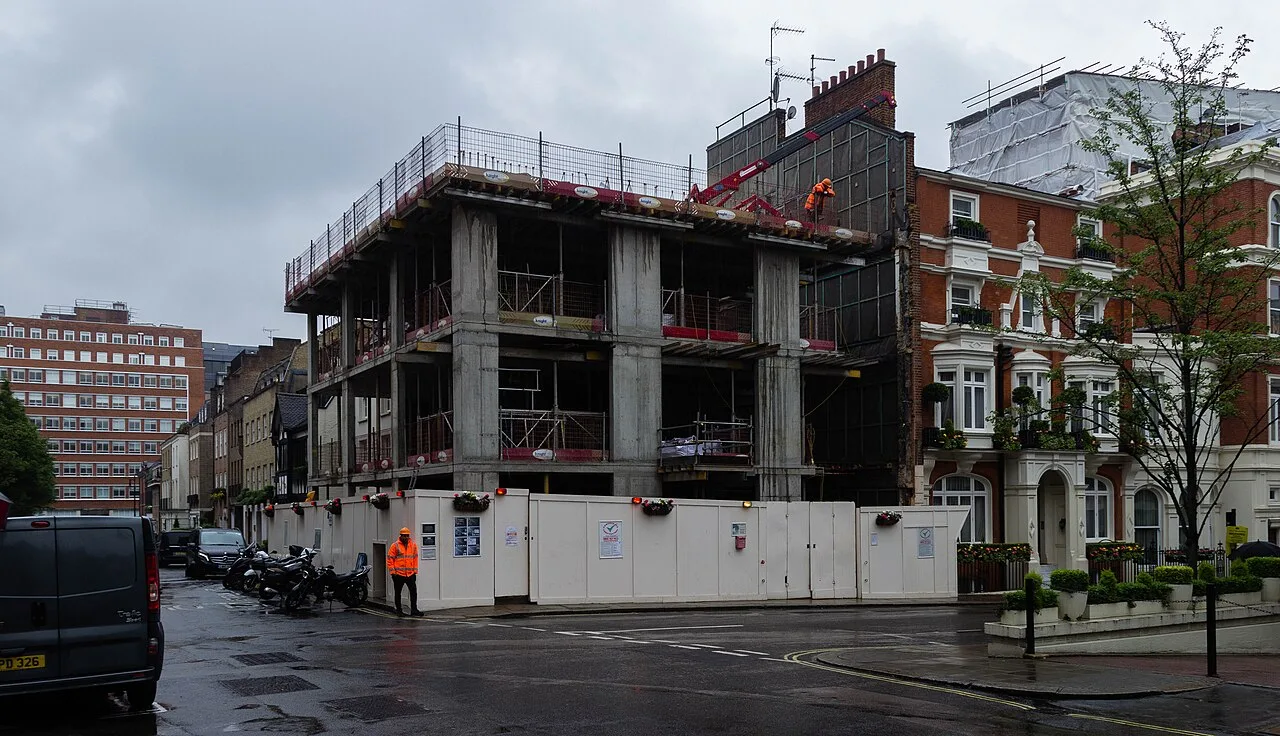
Several developers of London's luxury flats have gone into administration, and bigger firms are cutting back. The reason is a lack of buyers for finished homes in the most expensive postcodes.
Developers that ran out of money
London Richmond marketed itself as a specialist in the capital's "finer areas" and boasted a portfolio of 20 properties worth more than £30m. Its owners ran out of funding, and administrators were appointed in August. More than 300 creditors are still waiting for £39m, according to its administrator BTG.
Ardmore Construction was building 10 large schemes across London, among them two residential towers in King's Cross and luxury hotel projects in Mayfair and Kensington. It fell into administration in 2025. Its parent, Ardmore Group, still trades after creditors accepted a company voluntary arrangement, but the construction arm owed more than £29m to creditors and subcontractors as of September.
Not even the grandest address is safe. No 1 Palace Street, a luxury scheme near Buckingham Palace, entered administration in 2023. Its administrator FRP Advisory says only 20% of the flats had sold by 2025.
BTG declined to comment on London Richmond and Ardmore. Administrators at FRP declined to comment on No 1 Palace Street.
Bigger names step back
In October British Land said it would not go ahead with the second phase of its Canada Water scheme, citing soaring costs and weak sales. Berkeley Group, the city's largest residential developer, said this year it would stop buying new land. Taylor Wimpey has said it plans to leave London altogether.
The weakness is sharpest for flats. The average flat price was about £431,000 in June, which is £2,000 lower than in June 2016, according to Land Registry figures. House prices over the same period rose by about a fifth. Had flat prices tracked inflation, the average would now be £180,000 higher.
The slump is reaching jobs. The ONS estimates that job openings in construction dropped by 7,000 between July and September, which makes construction the hardest-hit sector in the UK workforce.
The numbers behind the glut
Market researcher Molior counted 1,400 completed but unsold homes in zone 1 at the end of September, three times the 2016 figure. Zone 1 takes in the City, the West End and central districts such as Mayfair and Marylebone. In the last 12 months only 1,600 homes began construction there, 75% fewer than ten years ago.
The sums have stopped working for builders. Building costs are climbing and hard to predict, loans cost more, and a developer can carry a growing debt for the whole build before any flat is sold.
Why wealthy buyers hold back
Jon Neale of Montagu Evans described a squeeze from rising costs on one side and weaker demand on the other. He said many of these homes go to overseas buyers, who are now less active. He pointed to changes in stamp duty and the end of the non-dom regime.
Stamp duty on additional properties can reach 19% for overseas buyers. On a £10m purchase, that would be a £1.9m bill.
Marcus Dixon of JLL said tax uncertainty and the cost of buying and holding have put off buyers who are not forced to purchase. The prime market suffers more, he said, because fewer people there need a home.
Some very wealthy buyers have chosen to rent. Jerome Lartaud, a buying agent for ultra high net worth clients, usually defined as people with at least $30m (£22.4m) in investable assets, said many have paused purchases and are staying in a London rental, both domestic and international buyers. He said anyone relying on a mortgage faces pressure, because rates can change even after exchange. JLL found 338 homes with annual rent above £150,000 were let in the past 12 months. That is 14% more than the year before and a record.
For builders, though, strong rents are no rescue. Neale said house and land prices are slow to adjust. He also said that, while everyone is confident about London in the long run because housing is short, "there is a lot of unsold stock building up".
Source: the Guardian