How Juneau Eats When Almost Everything Comes by Boat or Plane
Juneau has little farmland and one road that leads nowhere. Growers, a food hub and Tlingit sharing traditions fill the gap that the often-cited import figure misses.
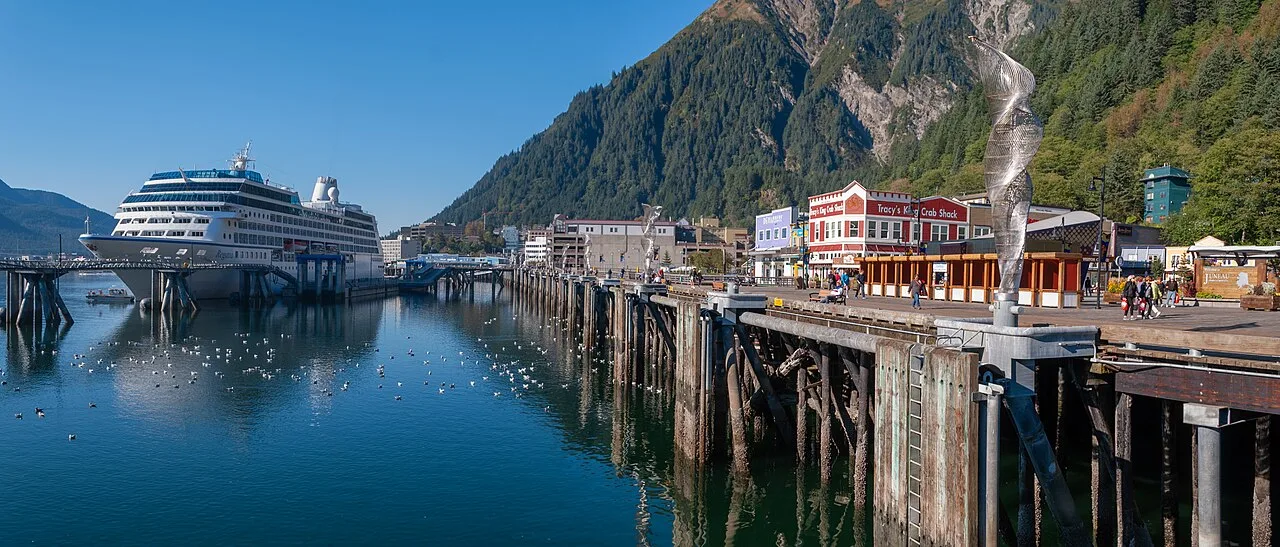
Almost everything that reaches Juneau comes by water or air, and a much-quoted statistic says Alaska imports 95% of what it buys. The city's food picture is wider than that number suggests, with growers, a food hub, schools and Tlingit sharing traditions all supplying part of it.
Programs built around the gaps
Federal nutrition programs expect either a farmer selling directly or a store that purchases goods and sells them on. Ecotrust's consignment marketplace, Salt and Soil, fits neither model. So in 2019 the non-profit started its own program, Healthy Foods = Healthy Families. Meghan Stangeland of Ecotrust says it avoids bureaucratic hoops and gets local food to people who could not otherwise reach or afford it.
Other projects work on skills and supply. Joel Bos runs a school garden program through Discovery Southeast. Two elementary schools produce 1,300lbs of food a year. "A shareable harvest is what creates the buy-in," he said. At Sealaska Heritage Institute, students and staff had spent days vacuum-sealing halibut in a traditional foods kitchen. Ecotrust also runs Moby, a mobile greenhouse that travels between communities on the Alaska Marine Highway. Stangeland says almost every community it has visited now has a permanent greenhouse or high tunnel.
Small farms, loyal subscribers
Joe Orsi, 67, a retired NOAA fishery biologist, farms a third of an acre on a steep hillside. Flat, non-marshy land is rare, the soil is acidic and the growing season runs only from May to September. Summer days bring up to 18 hours of daylight, but that does not lengthen the season. He has tried roughly 45 garlic varieties. He says he may make $20,000 a year.
Some of his harvest reaches Juneau Greens, a hydroponic shop run by John Krapek, who grows plants in water rather than soil. Krapek began in 2017 with 18 grow beds and now runs 100. Cheap California produce was impossible to beat and restaurant orders swung week to week. His answer was weekly subscriptions. There are now 425 subscribers, enough to open a storefront in 2024.
Sharing outside the market
Ricardo Worl, a Tlingit and senior communications officer at Sealaska Heritage Institute, describes about 14 communities in south-east Alaska reachable only by boat or plane. A village of a few hundred people supports only a handful of formal jobs. In that mixed economy, he says, cash serves the subsistence harvest, not the other way around. Inside Juneau, an informal processing center is likely to be "some auntie's kitchen".
Not everyone has what Stangeland calls the privilege of a boat and a freezer. Processing a harvest at volume takes space and equipment.
A number with no traceable source
The 95% figure turns up in coverage everywhere. The US Department of Agriculture cites it. The governor's announcement of a new state office of food security in 2022 led with it too. KTOO reported that nobody has tied it to a source that can be checked.
Stangeland uses the number with a caveat. It counts what Alaskans purchase, she says, and much food is shared or subsistence-harvested and never sold. The state's most recent comprehensive estimate, from 2014, is that Alaskans took in roughly 46m pounds of wild food. In rural areas that is about 275lbs per person per year.
One road, then the ferry
Juneau has about 35,000 residents and a single road, and it ends about forty miles north-west of town, where Glacier Highway turns from pavement to gravel. Stangeland is there when vehicles come off the Alaska Marine Highway ferry, and boxes of cabbage get unloaded. She is south-east food systems manager at Ecotrust, a non-profit based in Portland, Oregon.
The city has no weekly farmers' market. Orders from the farmers and processors in the Salt and Soil network arrive by whatever route suits each of them. Often that is a barge, sometimes a seaplane.
Source: the Guardian