Researcher Ties Chinese Open Models to Banned Nvidia Chips
A nonprofit analysis says top Chinese open-weight models carry traces of Blackwell training. The claim lands as Nvidia deals with its CEO's exit.
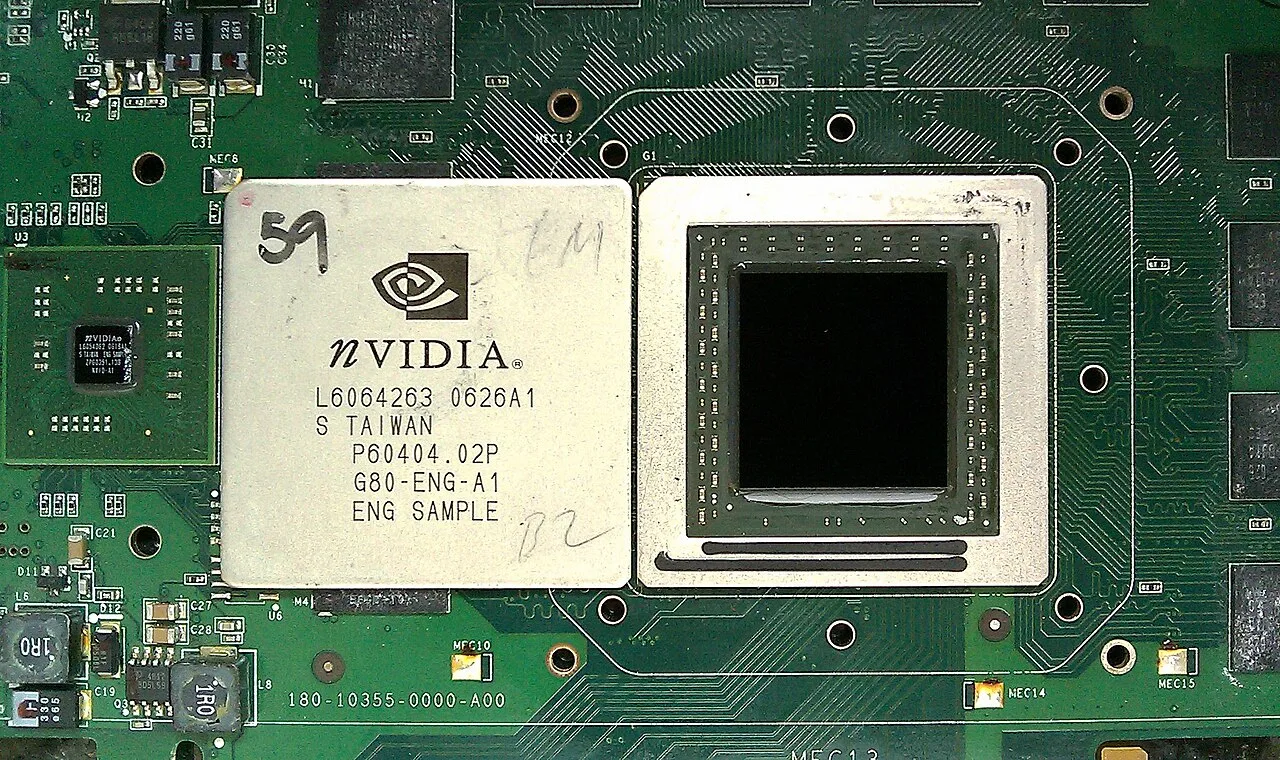
New research claims China's best-known open AI models were trained on Nvidia chips that US export rules keep out of the country. If it holds up, it widens the problem Nvidia already faces over smuggling.
What the weights show
Will DePue, a former OpenAI researcher, leads the nonprofit Unemployment Labs. He studied the weights, the internal numbers that define a trained model, of open models from DeepSeek, Moonshot AI, MiniMax and Ant Group. The weights keep an imprint of the chips that trained the model. DePue says he found clear signs of Blackwell training in the most closely watched models. He names Moonshot's Kimi K3 releases and DeepSeek's V4 models.
Blackwell GPUs cannot legally go to China or Chinese-owned firms. For the weaker H200 the administration allows exports, but shipments must go by an indirect route, which lets the US claim a 25% tariff.
Michael Kratsios, the White House technology adviser, said earlier this year, citing US intelligence, that Moonshot had run on banned Nvidia chips. Epoch AI, a nonprofit, puts at about two million the advanced chips that got into China in 2024 and 2025 through schemes built to conceal where they were going.
A caveat about where the chips sat
That does not establish that Nvidia hardware alone trained the models, or that any export law was broken. The hardware may have sat offshore, a route Chinese firms often use to rent compute. Epoch puts imports of Nvidia AI accelerators into Malaysia at 275,000 over 2024 and 2025.
The stated aim of the export bans is to stop exactly this use, though. For years, China hawks have pressed for rules that cover the user of a chip, and not only its owner or its location. Sam Bresnick of Georgetown's Center for Security and Emerging Technology told TechCrunch this summer that blocking access in mainland China, Hong Kong and Macau while allowing it in Malaysia makes no sense to him.
The Megaspeed link
Nvidia CEO Jensen Huang has left the company after admitting an affair with Alice Huang, an executive at Megaspeed. Megaspeed is implicated in smuggling Nvidia chips into China, and Alice Huang is also alleged to act for Chinese intelligence.
His ties to a customer and two employees have attracted the most public attention. TechCrunch notes, though, that Nvidia's possible liability for export violations likely weighed on the decision to part ways with him.
Through its subsidiary Speedmatrix, Megaspeed has sat at the core of that trade for years. Both US and Singaporean authorities have investigated it. On Friday Bloomberg reported that a company linked to Alice Huang helped smuggle banned chips to a data center in Shanghai.
Nvidia and Huang vouch for the legitimacy of Megaspeed's data centers after visits by Nvidia officials. US companies have only limited duties to track what customers do with controlled goods such as AI chips. The picture changes if investigators confirm smuggling and that Huang knew about it.
Demand, stockpiles and Washington
In May, the short seller Culper argued that Nvidia had a "China problem". Culper said a large share of revenue came from Chinese demand, either through remote data centers or smuggling. Its bet rested on Beijing's response to the bans, which was to commit again to domestic chips.
The same report detailed how Megaspeed deals with Nvidia. It alleged that Chinese firms barred from US chips stand behind Alice Huang's companies.
Some 600,000 H200 chips are reportedly stockpiled in Hong Kong, waiting to enter China. Observers do not agree on why they have not been cleared. Stanford's Graham Webster doubts that holding them back would boost domestic production, given how large chip demand is. Other theories include a potential trade deal and worries about surveillance technology in the chips.
Washington is under scrutiny too. Reports say Commerce Secretary Howard Lutnick may lose his post because his investigators overlooked suspicious chip buyers and kept too close to Nvidia officials.
Source: TechCrunch