Senate Advances Permitting Bill Split Over Gas and Clean Power
The Senate voted 73-25 to move a bipartisan permitting bill forward. Environmental groups and clean energy advocates are split over what it would build.
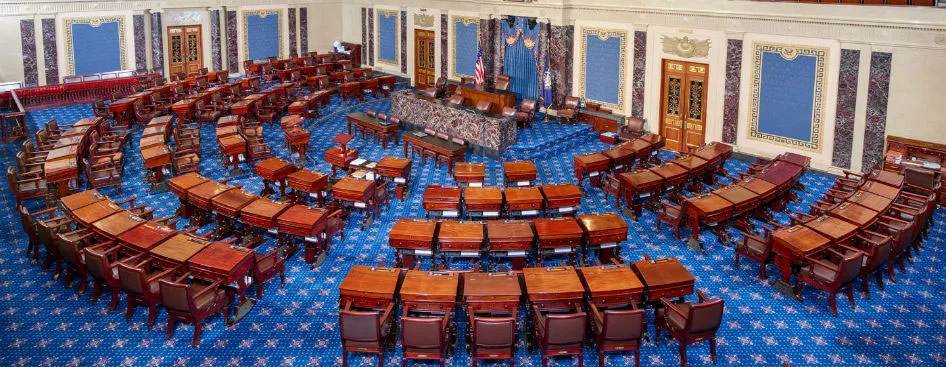
The Senate has moved a bipartisan bill that would speed up permits for datacenters, gas pipelines and transmission lines. Climate advocates are divided over it, because the same fast track serves very different energy futures.
Who is against it, and why
Earthjustice, the Sierra Club and the ACLU oppose the bill. They argue it would cut deep into environmental laws such as the National Environmental Policy Act (Nepa) and fast-track gas pipelines and ICE detention centers.
Indigenous groups held a press conference on Friday and asked senators to vote no. They say the bill would loosen the government's obligation to consult tribes when a project touches them. "This is such an existential threat to Indian country," said Mark Macarro, president of the National Congress of American Indians.
The ACLU wrote to senators that the bill would hamper its work to stop the expansion of immigrant detention. Nepa is the law attorneys used to block plans to convert 11 mega-warehouses into ICE detention centers. The bill would narrow what counts as a "major federal action" that triggers a Nepa review, and would effectively end courts' power to enforce compliance.
The gas pipeline angle
The American Petroleum Institute backs the bill. Abbie Dillen, president of Earthjustice Action, says it creates a fast track for gas pipelines. She ties that to exports of liquefied natural gas and to gas for power-hungry datacenters.
The bill could help pave the way for the Constitution pipeline, which Williams Companies is trying to build through New York. The state denied its water quality permit in 2016. The pipeline could benefit from the bill's changes to the Clean Water Act.
Gas pipelines in the west are also in play. Western States and Tribal Nations, a fossil fuel advocacy group, wants to build lines that would supply domestic datacenters and export liquefied natural gas from the west coast. Its president, Andrew Browning, has been discussing the bill with lawmakers.
What the 417 pages rewrite
Supporters say large projects take too long to build in the U.S. The bill simplifies federal rules for interstate transmission lines and limits the use of the Clean Water Act. It shortens Endangered Species Act timelines and narrows National Historic Preservation Act reviews. It also changes who has standing to sue.
The clean energy case
Some clean energy advocates want the bill anyway. Building interstate transmission lines can run to ten years. By the end of 2025, 2,060 GW of generation and storage capacity was lined up for a grid connection.
Ben King of Rhodium Group says the bill would reform that queue and unlock transmission, so building can move faster when the next wave of climate policy arrives.
What the bill does to emissions is uncertain. Rhodium's analysis found domestic emissions fall if it passes, assuming 85% of added capacity is renewable. Purdue professor Kevin Kircher's model found emissions would rise. He says some grid operators removed speculative offers from their queues this year, so that assumption may not hold.
Kircher also says the models have not had time for peer review since the bill was introduced on 30 September.
The vote and the clock
On Monday senators voted 73-25 on a cloture motion to open debate on the Bipartisan American Affordability and Jobs act, known as Baaja. The motion did not pass the bill. It was the first of several procedural votes. Trump urged all senators to back it, and two Republicans and two Democrats sponsor it.
The Democrats elected last week take their seats in January. That leaves supporters time to push the bill through the Senate, and technically through the House before the new Congress. Hakeem Jeffries, expected to be House speaker, said the bill falls short in several areas, including on tribal sovereignty. He would not rubber-stamp it without more involvement from his caucus.
Heinrich and Whitehouse, the Democratic sponsors, said earlier on Monday that they had the votes. Heinrich said last-minute changes secured tribal consultation and that in his view the bill tilts toward renewables, not fossil fuels. "If we can create an open, competitive level playing field, clean is cheap, and cheap wins in the marketplace," he said. Whitehouse argued that passing it would prepare the ground for clean energy policy once Democrats hold majorities in both chambers.
Source: The Guardian