Ecuador Courts Green Finance While Planning More Oil Drilling
Ecuador is pursuing green bonds, debt-for-nature swaps and biodiversity credits to fund conservation, even as it plans new oil tenders in the Amazon and mining of critical minerals.
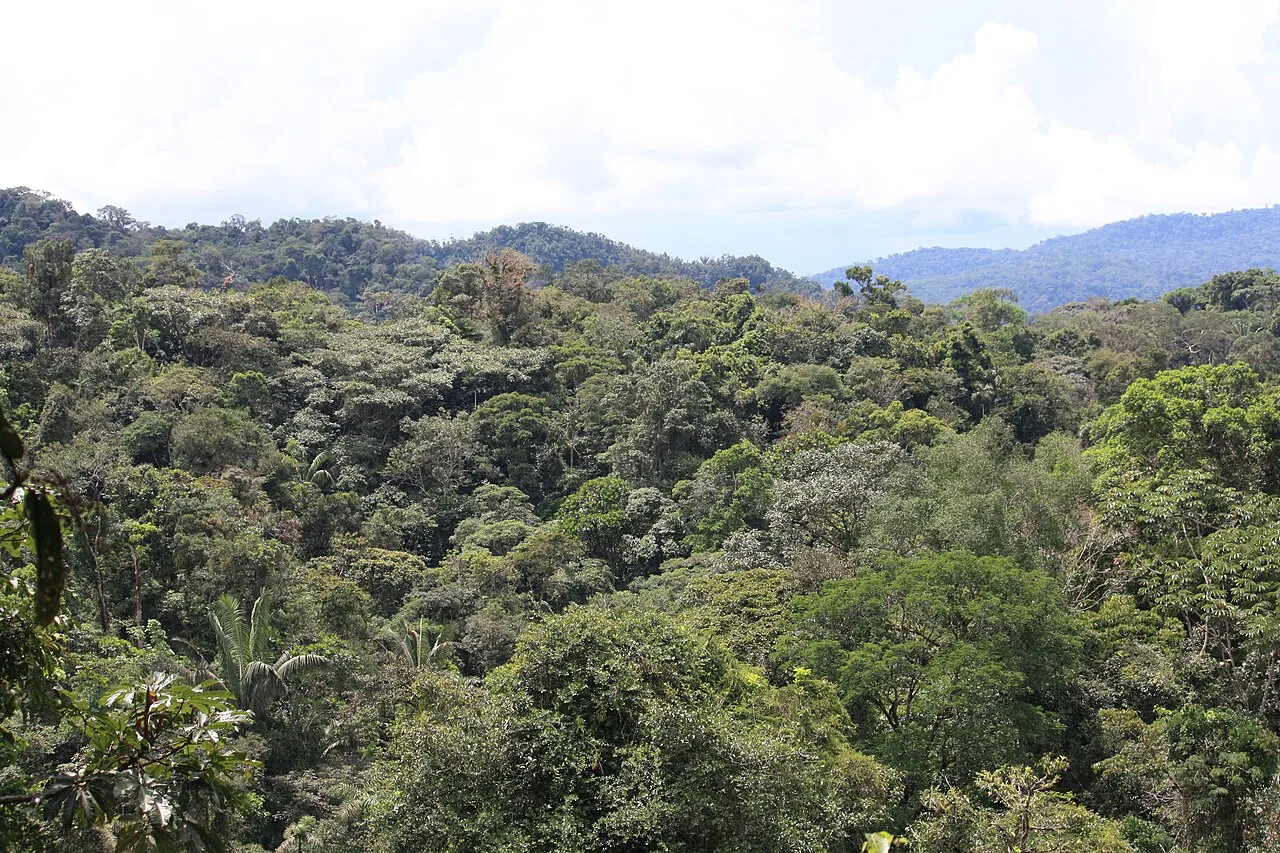
Ecuador wants investors to help pay for protecting its forests and islands. At the same time it plans to open more of the Amazon to oil exploration.
Credits for nature, not for damage
Biodiversity credits are a new way of monetizing nature. They are modeled on carbon credits, which big companies purchase to back their sustainability pledges. The credits track measures such as species counts in an area or tree canopy cover, and the money raised goes back into protecting nature.
One difference matters. Carbon credits can offset emissions, and biodiversity credits cannot. Martin Vaquié, co-founder of Bloomlabs, a Berlin company that tracks the market, says they pay for verified nature outcomes and, to date at least, not for compensating damage.
Ecuador's first Bio Summit ran in Quito from Nov. 4 to Nov. 6. The event aims to bring the country's natural assets into global finance. Its president, Marcelo Salame, is working on a project that would bring biodiversity credits to Ecuador for the first time. It would preserve and monetize 260 hectares, or 640 acres, of the Prosperina forest in Guayaquil, owned by ESPOL University. Salame calls biodiversity multidimensional and says credits reflect a whole ecosystem, not carbon emissions alone.
Jerry Toth, a conservationist and co-founder of the nonprofit Third Millennium Alliance, shares that concern about narrow measures. Carbon markets, he says, can reduce a forest's ecological value to one number, the tons of carbon it stores. He warns that people then optimize for that metric at the expense of everything else. He hopes credits can reflect what a single figure misses.
Cacao under taller trees
Toth also runs the chocolate maker To'ak, which made headlines for a bar billed as the world's most expensive. His nonprofit partners with farmers on degraded land, restoring it by planting cacao beneath taller trees.
Toth said To'ak pays the farmers roughly $1.20 for each pound of cacao, close to twice the going market rate. He calls making sure chocolate production does not deplete nature "the key question." His goal from the start was to use chocolate to reverse deforestation.
Green finance already in use
Ecuador already has some experience with this kind of money. It uses the U.S. dollar as its currency. In March, IDB Invest, which is the Inter-American Development Bank's private-sector arm, joined Banco Bolivariano, a lender based in Ecuador, to issue a $120 million biodiversity bond for conservation projects.
The government also completed two debt-for-nature swaps, in 2023 and 2024. In such a deal the country gets its debt refinanced on easier terms and pledges to spend the savings on conservation. Together the two swaps freed up about $1.1 billion for the Amazon and the Galapagos Islands.
Next on the list is a sovereign green bond. Environment and Energy Minister Juan Carlos Blum said Ecuador hopes to issue its first one in 2027, to fund protection of its coast, its mountains and the people whose livelihoods rely on them. Officials are asking the European Union for advice on such instruments. The bloc set its green bond standards in 2024. Ecuador will also host the U.N. biodiversity summit, COP18, in 2028.
Blum names public awareness as another challenge. He told CNBC by video call that many people do not realise how much they depend on nature and biodiversity, or how vulnerable everyone is to climate.
The oil and minerals side of the ledger
Ecuador ranks as a major oil producer in Central and South America. Local media reported that in October the government announced new oil exploration tenders covering parts of the Amazon. Indigenous leaders reportedly met the news with criticism and strongly oppose the plans.
Oil is deeply embedded in the energy system. In 2024 about 80% of Ecuador's energy came from oil and oil products, the International Energy Agency says. Hydropower supplied about two-thirds of its electricity.
The government also plans to capitalize on critical minerals, and that has drawn protests from Indigenous and environmental groups. Blum says cracking down on illegal mining is a focus. He told CNBC he knows legal mining harms the environment, but called illegal mining a far bigger problem. On the balance between biodiversity and resource use, he said, "it's a delicate matter."
Source: CNBC