AST SpaceMobile Plans Its Own Reusable Rocket, Blacklift
The satellite company says it is building a rocket to launch its BlueBird satellites, with a first flight targeted for 2028. Firefly Aerospace will supply the engines for the first three launches.
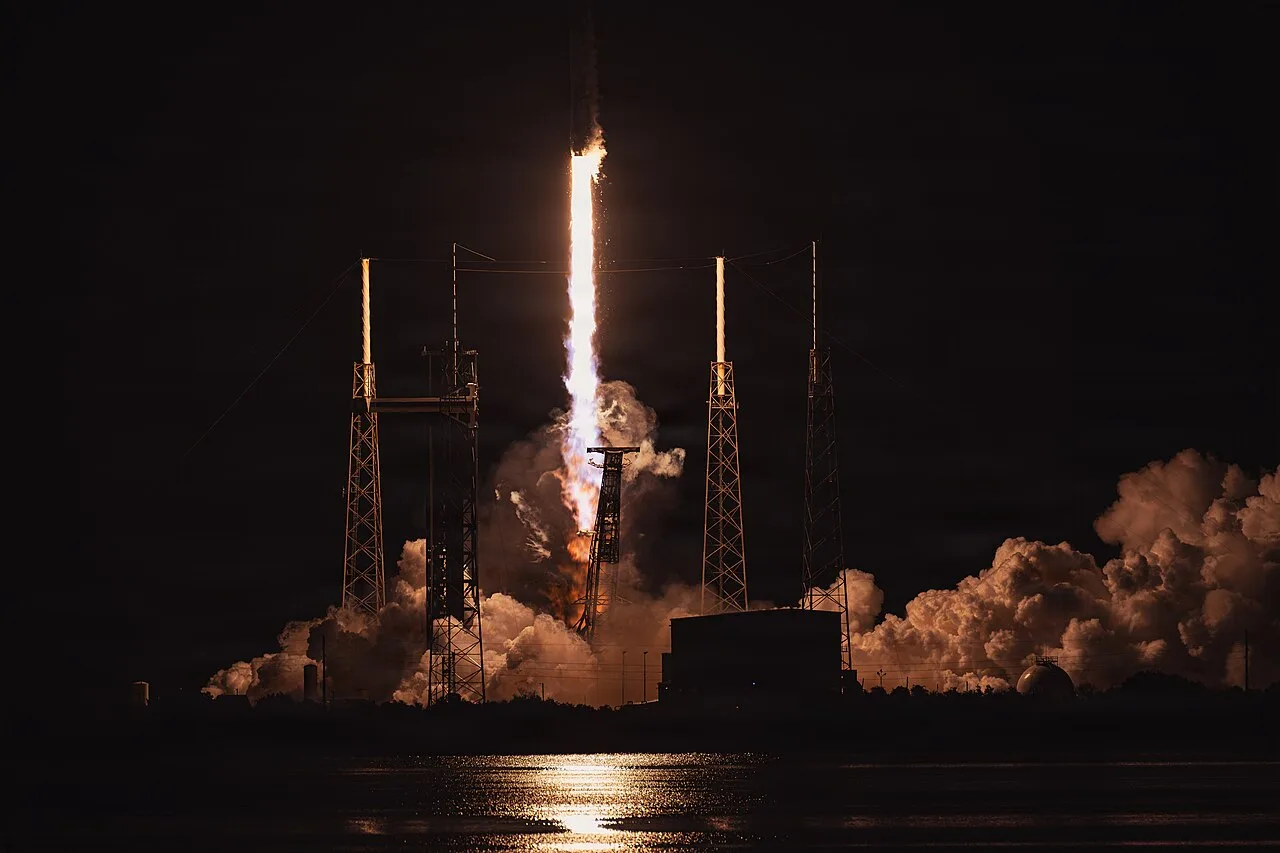
AST SpaceMobile wants to be more vertically integrated. On November 6 it announced Blacklift, a reusable rocket meant to carry its broadband satellites to low Earth orbit, with a first flight targeted in 2028.
Why build a rocket at all
The Texas-based company is building a satellite constellation whose BlueBirds deliver internet straight to phones. Thirteen have been launched to date, eight of them next-generation "Block 2" craft. Each of those has an antenna covering 2,400 square feet (223 square meters), the largest a commercial satellite has deployed in low Earth orbit.
BlueBirds have flown on three different rockets: SpaceX's Falcon 9, Blue Origin's New Glenn and India's Launch Vehicle Mark-3. Space.com says the company now wants to be more vertically integrated, which explains Blacklift.
Founder and CEO Abel Avellan said the rocket would give the company regular, unconstrained access to orbit and the most favorable owner economics in the industry.
Firefly engines, with a licence to follow
Firefly Aerospace, also based in Texas, has agreed to supply engines and engineering services for the first three Blacklift launches. Later flights will use engines AST SpaceMobile builds itself under a licence from Firefly.
The engines are called Miranda, for the booster, and Vira, for the upper stage. Neither has flown. Miranda has been tested on the ground, firing for more than 4,200 seconds across 175 hot fires, according to the company. President Scott Wisniewski said it will let the firm skip the usual five-to-10-year development cycle.
Firefly's supply and services deal covers the first three launches and is worth $500 million. The licence cost about $800 million, half in cash and half in stock.
What Blacklift can carry
Blacklift is designed to lift 20 tons to low Earth orbit, enough for up to five BlueBirds per launch. For comparison, the Falcon 9 can lift about 25 tons.
BlueBird launches will continue in the meantime. It already has launch contracts with other providers covering more than 100 satellites across 2027 and 2028.
A crowded field of new rockets
The announcement came ten days after Cowboy Space unveiled Big Iron, a rocket for its planned constellation of 20,000 AI data centers. That firm also targets 2028 for a first liftoff.
SpaceX has said it plans to phase out Falcon 9 and Falcon Heavy once Starship is running. It has indicated it will prioritize its own satellites on Starship, and Elon Musk has suggested those could number 100,000 Starlink V3 satellites and a million Starmind AI data centers.
Source: Space.com