125,000-Year-Old Saudi Lakeside Shows How Early Humans Lived
A study in Science on the Uruq al-Julaybah site in Saudi Arabia finds traces of toxic plant compounds on 125,000-year-old stone tools, which may point to poisoned hunting weapons.
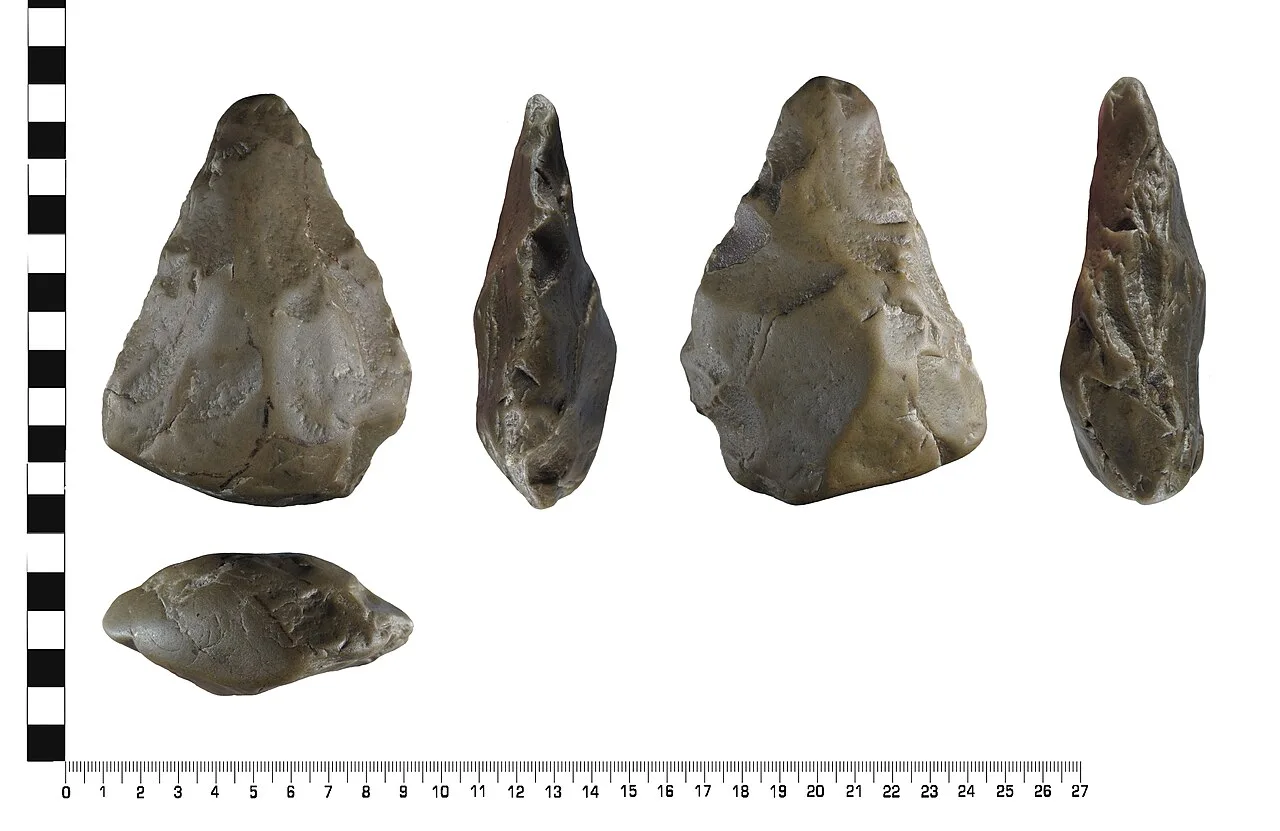
Traces of plant poison on stone tools may show that people hunted with toxic compounds in Arabia about 125,000 years ago. The evidence comes from Uruq al-Julaybah, a lakeside site in Mundafan, southern Saudi Arabia, and the researchers describe it only as potential use.
Poison, resin and palm leaves
Residues on the tools came from a wide range of plants, some of them toxic. Where resin and woody tissue show up, the tools were probably hafted, meaning stone points fixed onto a handle or shaft. Other traces show that people processed tubers, bushes and palm leaves for food and everyday tasks.
Researchers describe the toxic-compound evidence as among the first of its kind recorded in Saudi Arabia. The site also yielded some of the earliest signs of palm-related vegetation in the region.
A lake where there is now desert
The setting looked nothing like today's Arabia. The lake covered roughly 340 square kilometers (131 square miles) and was up to 29 meters (95 feet) deep, according to satellite terrain modeling. Sediments and aquatic remains show a stable freshwater lake with vegetation around it.
The period is the last interglacial, a warm, humid phase often called Green Arabia. Researchers say the shore brought freshwater, animals, plants and raw materials together. People there made stone tools, readied hunting equipment, worked fibers and processed animal and plant resources.
What was found on the shore
At over 130 locations the researchers recorded more than 500 fossil specimens, both plants and animals, invertebrates among them. Hippos, camels, gazelles, ostriches, Arabian oryx and extinct long-horned buffaloes were among the animals identified.
From the main study area they collected 5,511 stone tools larger than 2 cm (0.8 inches). Almost all were flint, shaped with Levallois techniques. That is a way of preparing a stone core so that flakes of a planned form can be struck from it.
How the picture was built
Few sites let archaeologists tie bones, tools and plants to one moment. Here the animal remains, tools and plant material came from a single dated context, which allows daily life on the lakeshore to be reconstructed in unusual detail.
Fossils and tools were gathered in systematic grid surveys. Sand and fossil teeth were dated by two different methods, tools were refitted in 3D, and their surfaces were checked for residues under a microscope and by chemical analysis.
The study appears in Science. Authors come from King Abdullah University of Science and Technology (KAUST), with fields from geology and archaeology to botany and micropaleontology. Colleagues at Griffith University, the Saudi Heritage Commission and other institutions took part. Chris Clarkson of Griffith called the combination of animal remains, tools and plant material in one dated context "what makes this discovery so significant."
Source: Phys.org