Robot Builds Antenna Structure in Orbit Without Human Control
A Caltech payload assembled a 1.4-meter structure in space on its own. DARPA hopes the approach will one day scale to structures kilometers across.
A robot has put together part of a satellite structure in orbit with no one at the controls. It is the first time anything has been built that way in space, according to the team behind it.
What the robot built
The project is called Autonomous In-Space Tensioned Reflector Assembly, or ASTRA. Caltech ran it with DARPA funding. A robotic truss builder assembled a reflective antenna from Kapton film, composite fiber tubes and aluminum joints.
The structure it built measured 1.4 meters (4.5 feet) across, though the truss itself was not completed. "This is the first time that a structure has been autonomously constructed in space," said Sergio Pellegrino, a Caltech professor of aerospace and civil engineering, in a statement on Nov. 5. Pellegrino leads the team.
How the mission worked
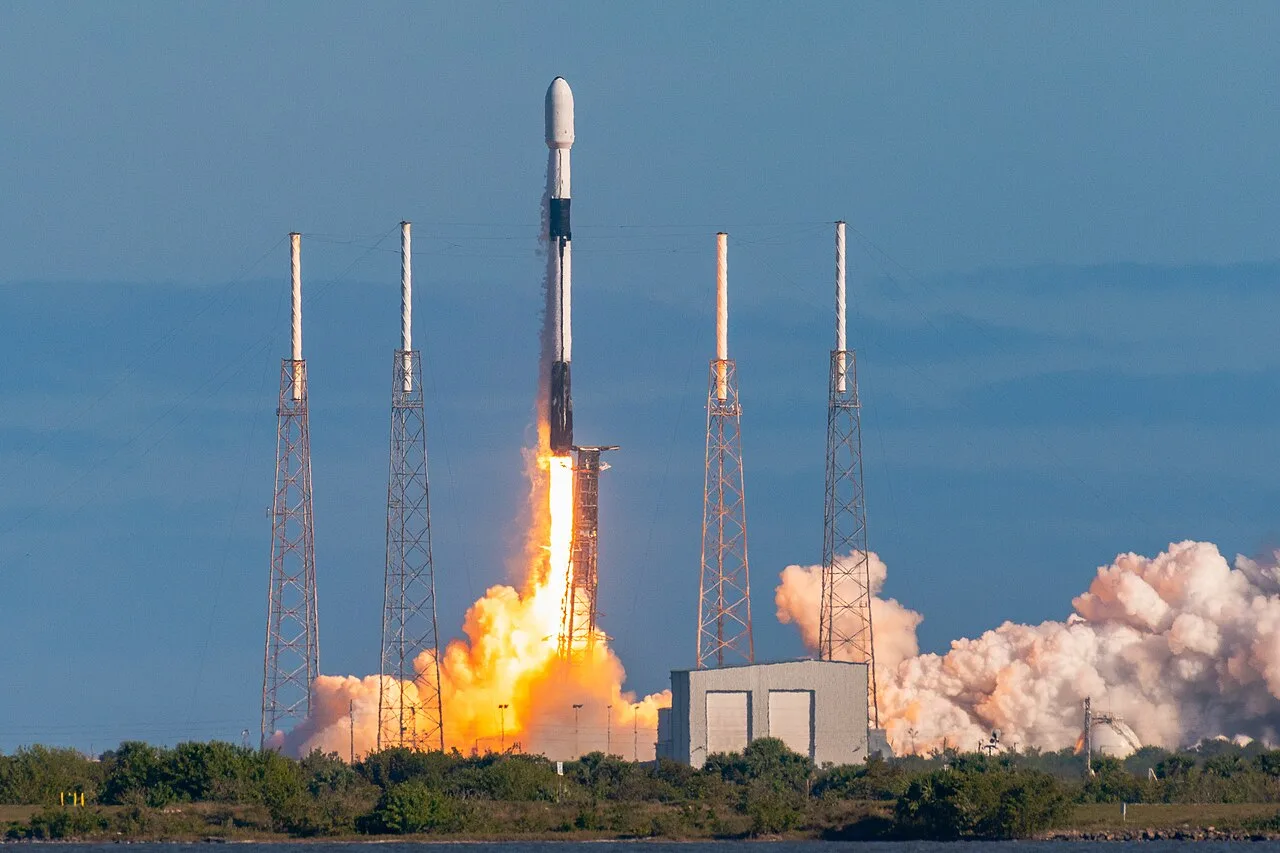
ASTRA reached orbit on Momentus's Vigoride 7 space tug. The tug launched on March 30 on SpaceX's Transporter-16 rideshare mission, alongside many other payloads. Two earlier phases had come first for the team: a stage that defined the mission, then lab tests of the hardware.
Contact windows were brief, 15 minutes a day in total. In that time the engineers sent commands and followed the robot's work: it collected parts, positioned them and built on the assembly plate. The payload held two prebuilt truss sections, a robotic manipulator and the material for the rest of the truss.
The team worked through many small surprises along the way. Time ran out before the whole truss was done, so extra antenna sections were never built. Pellegrino still called the work a success and noted how small the team was and how short the schedule was.
Why build in space at all
A rocket's fairing, the nose cone over the payload during launch, caps how large anything can be at liftoff. A structure built in orbit would be limited mainly by engineering and cost.
The need may grow as companies plan megaconstellations for phone service, AI computing and other uses. Pellegrino pointed to telescope mirrors, radio telescope structures and very large solar arrays for space solar power.
Money is already flowing. A record $20.8 billion went to space startups worldwide in the third quarter of 2026 alone.
ASTRA belongs to a DARPA program called NOM4D, short for Novel Orbital and Moon Manufacturing, Materials, and Mass-efficient Design. Program manager Andrew Detor said the aim is structures hundreds of meters or kilometers across. "Nothing approaching that scale can be achieved today," he said.
NOM4D also backs a University of Illinois Urbana-Champaign project. It will run on the International Space Station and focus on hardening carbon tubes in orbit.
Source: Space.com